While states still use military force in pursuit of national interests, private military and security companies (PMSCs) have become an increasingly common instrument, enabling states to apply pressure, manage escalation, and maintain deniability in ways that conventional deployments cannot. As resistance to foreign troop deployments grows and strategic competition shifts below the threshold of open war, coercion increasingly occurs through irregular channels where escalation can be managed and attribution contested.
In this environment, mercenaries and PMSCs are no longer peripheral actors. They have become instruments of strategic competition, enabling states to apply pressure while maintaining deniability and shifting political risk. However, regulatory frameworks have not kept pace. Still anchored to state-centric, battlefield-oriented models of conflict, they struggle to account for the foreign policy and irregular warfare functions that private force now performs. The result is a widening mismatch: states retain the strategic benefits of deniable coercion while distancing themselves from responsibility for its consequences.
The mismatch is most visible in how private force is regulated. Existing frameworks organize around actor labels such as “mercenary,” “contractor,” or “PMSC” rather than the functions these actors perform and the effects they are hired to produce. Treating private force primarily as a classification problem obscures how it operates in contemporary competition. The regulatory blind spots of legal status, accountability, and escalation management show how each factor sustains marketized coercion below the threshold of war.
The Regulatory Framework: Three Strategic Blind Spots
Regulatory blind spots are not isolated problems—they reinforce one another. When the legal status of private force is unclear, responsibility becomes harder to assign. Activities fall into jurisdictional gaps, and no single framework is sufficient to establish accountability. Weakened accountability, in turn, makes deniable coercion easier to employ as a tool for managing escalation. Together, these dynamics create a self-reinforcing system in which ambiguity, diffusion, and deniability reinforce one another.
Legal Status
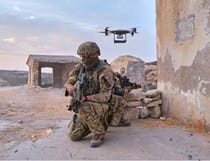
The rules governing participation in armed conflict are primarily defined by international humanitarian law (IHL), which distinguishes between combatants, civilians, and mercenaries. These categories determine who may lawfully use force, who is protected from attack, and what legal consequences follow. In practice, however, private military actors often operate in roles that fall between these categories. Contractors may maintain weapons systems, operate drones, provide targeting intelligence, or otherwise support military operations in ways that blur the line between civilian support and participation in hostilities.
As a result, ambiguity persists around the distinction between mercenaries and contractors, the boundary between civilian and combatant roles, and the circumstances in which IHL applies—particularly in irregular or internal armed conflicts. The outcome is a persistent gray zone in which the legal status of private actors remains contestable. That ambiguity is not incidental; it creates space for deniable coercion. Existing reference frameworks, such as the International Committee of the Red Cross’ Montreux Document and the International Code of Conduct Association ecosystem, provide guidance but do not resolve these classification problems in ways that trigger enforceable constraints.
Accountability
When legal status is ambiguous, accountability becomes harder to enforce. Outsourcing fragments control through contracting chains, subcontracting arrangements, and complex attribution doctrines that distribute responsibility across states, firms, intermediaries, and financiers. Even when harm is visible, determining who authorized, directed, or enabled an operation can be slow and evidentially difficult, creating opportunities for denial and dispute.
These challenges intensify as private actors expand into war-adjacent enabling functions, including: intelligence, surveillance, and reconnaissance support; cyber and data services; logistics; and technical infrastructure. Because these activities often rely on cross-border systems and layered contracting arrangements, responsibility pathways become longer and harder to trace. The result is an accountability environment in which harmful outcomes may be visible while responsibility remains contested or delayed.
Escalation Management
As responsibility becomes more diffuse, private force can provide strategic value in its employment. States can apply pressure through these intermediaries while remaining below thresholds that would trigger clear legal consequences, stronger retaliation, or greater public scrutiny. Outsourcing thus becomes a mechanism for managing escalation risk: coercion can be applied while maintaining plausible deniability.
Despite this challenge, regulatory debates continue to focus on classification and compliance rather than on how private force shapes escalation dynamics. The result is a permissive system. Legal ambiguity keeps operations contestable, accountability gaps diffuse responsibility, and deniability allows states to manage escalation while minimizing political risk.
Collectively, these blind spots explain the persistence of regulatory frameworks that accommodate modern state behavior. The system effectively incentivizes states to utilize marketized coercion within today’s competitive strategic environment.
Irregular Warfare as the Operating Environment
That operating environment is now widely understood as irregular warfare (IW), even if states have been insufficiently grappling with its dynamics in strategic competition for years. The U.S. Department of Defense defines IW as “a form of warfare where states and non-state actors campaign to assure or coerce states or other groups through indirect, non-attributable, or asymmetric activities.” The definition encapsulates contemporary competition: coercion is increasingly pursued through methods designed to remain ambiguous, deniable, and difficult to attribute. DoD’s decision to define IW in terms of non-attributable and indirect activities is significant because international humanitarian law and existing regulatory frameworks were built around the opposite assumption. The presumption was that force is visible, state-directed, and attributable. For regulation, this matters because the strategic environment now systematically rewards forms of force that can operate below the political and legal thresholds associated with open war.
During Russia’s seizure of Crimea in 2014, personnel operating without national insignia—often referred to as “little green men”—enabled Moscow to deny direct involvement while establishing control on the ground. This episode demonstrated how contestable attribution can be used to manage escalation and delay response even when the source of coercion is widely suspected. Similar dynamics have since become routine across multiple theatres, allowing states to exert pressure while maintaining political distance from their proxies.
The result is a clear division of labor. High-end, overt military force remains central for deterrence and declared warfighting, but day-to-day competition is increasingly conducted through indirect and politically deniable means. Force functions less as a decisive battlefield instrument than as calibrated pressure applied below the threshold of open war. As Jonathan Schroden’s analysis of recent U.S. IW guidance underscores, irregular warfare is now treated as relevant across both competition and conflict as a sustained, cross-domain form of campaigning.
Portfolios of Coercion: The State–Market Bargain
Enter mercenaries and PMSCs—not as peripheral actors in contemporary conflict, but as integral to how competition is now organized. Markets for armed labor have historically expanded as states face political constraints on deploying uniformed forces and shift towards projecting power without sparking a declared conflict. Thus, states opt for more subtle capabilities and indirect approaches to exert force, opening an opportunity for state-market bargaining.
Governments exchange money, contracts, and legal cover for services that facilitate competition in the gray zone. Private actors provide operational capability in exchange for revenue and institutional access, absorbing risks that would otherwise fall on the state. States essentially select from a portfolio of instruments that span degrees of legality, deniability, control, and political risk.
PMSCs and mercenaries occupy distinct positions within that portfolio. PMSCs sit at the managed end. Their activities can be framed as contractual and regulated, making them easier to integrate into official planning and defend publicly when some degree of attribution is acceptable. They offer capability with greater oversight, control, and legality—particularly in roles such as security provision, training, logistics, or technical support. In some cases, this allows states to leverage pressure that is attributable but politically manageable.
Mercenary labor sits at the deniable end. Its illegality and stigma introduce risks but also create strategic utility. Mercenaries are more likely to be employed covertly because their ambiguous or unlawful status makes disavowal easier when operations are exposed. Control is typically weaker and legal exposure sharper, but distance from the state becomes easier to claim. This exercises pressure politically derisked through ambiguity and disassociation.
The distinction matters because each option supports a different coercion strategy and its accompanying trade-offs. PMSCs trade deniability for control and plausible legality, while mercenaries trade legality and control for distance and disavowal. This flexibility makes marketized coercion advantageous in an environment where precise application of force and escalation management are strategically necessary.
State Practice as Precedent-Setting
A durable model emerged from U.S. and UK reliance on contractors during operations in Iraq and Afghanistan. Private firms provided logistics, security, training, intelligence, and infrastructure services at an unprecedented scale—allowing governments to sustain operations, while limiting the visible footprint of uniformed forces. Layered contracting chains and dispersed oversight made it difficult to determine who authorized or controlled activities when harm occurred, especially where contractors operated nearby combat zones. Coercive effects were visible, but responsibility was slower to trace and easier to contest.
Other states have adapted similar approaches to indirect engagement. The United Arab Emirates, Turkey, and China each demonstrate variations of this model. In Yemen, the UAE relied on foreign contract soldiers and security networks to sustain operations while limiting domestic exposure. Turkey-linked private military actors, most prominently SADAT International Defence Consultancy, supported aligned forces in ways that blur legal classification and complicate attribution, while allowing Ankara to project influence. China applied a more controlled approach, relying on private security companies to protect overseas interests while outsourcing armed protection where necessary. In each case, networks of contractors and intermediaries extended state influence while diffusing legal responsibility.
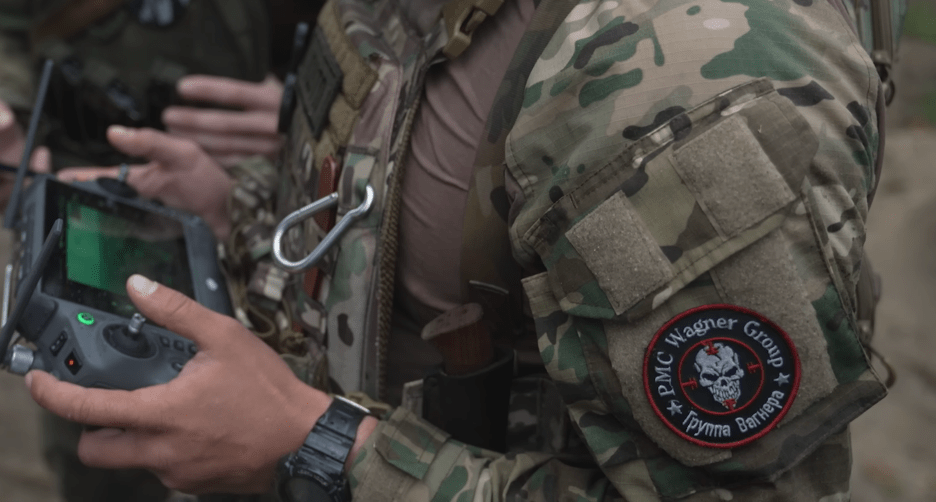
Russia’s use of the Wagner Group demonstrates how all three blind spots can converge within a single model. Wagner’s record across Mali, Libya, Syria, and the Central African Republic is mixed, with stabilization outcomes limited and human rights costs significant. But operational effectiveness is not the relevant measure. States continued to employ the model precisely because deniability and risk transfer remained strategically valuable independent of outcomes on the ground. Following Wagner’s restructuring after the 2023 mutiny, successor formations including Africa Corps have continued operating across the Sahel. The form changed; the strategic logic did not.
Ukraine points to a more forward-looking development. Discussions among U.S. and European policymakers about the potential role of private military companies in future security arrangements reflect a broader shift in security strategies. Private actors could provide assistance while avoiding the political and escalatory consequences associated with deploying national troops. Ukraine’s draft law on PMSCs, which considers force employment of private companies, signals a willingness to formalize this model.
New Frontiers of Regulation to Stabilize Marketized Coercion
This dynamic is reinforced by supply-side adaptation. Private actors increasingly package coercive capability as modular services—combining security, intelligence, cyber, and data-driven functions into integrated systems that enable PMSCs to produce comprehensive coercive effects rather than discrete tasks. The regulatory problem therefore shifts from actor identification towards which effects are being generated, through what systems, and under what conditions. Existing frameworks remain focused on actor classification, even as practice shows that the strategic significance of private force lies in the functions it performs and the effects it generates. To address these gaps, I offer three recommendations.
First, regulatory frameworks must shift from actors to functions. Activities that shape the use of force such as intelligence support, drone operations, cyber activities, and data-driven targeting should trigger heightened scrutiny regardless of how they are labeled. Focusing on functions mitigates legal ambiguities borne through shifting roles and contractual arrangements.
Second, regulation needs to shorten accountability pathways. Outsourcing disperses responsibility across complex contracting chains, making it difficult to establish who enabled what. Governance should require clearer responsibility mapping across contractors, subcontractors, and enabling services, so that accountability tracks the production of coercive effect rather than stopping at formal contractual boundaries.
Third, regulation must address escalation dynamics directly. Private force is attractive because it allows states to apply pressure while maintaining distance from responsibility. Governance frameworks that ignore this dynamic will continue to miss the strategic logic driving its use. Raising the political and legal costs of deniable coercion—through clearer attribution expectations, transparency requirements, and limits on outsourcing high-risk functions—would reduce the ability to use private actors as shields against escalation.
Taken together, these recommendations do not eliminate private force, but they reorient regulation toward the functions, incentives, and effects that make it strategically valuable.
Governing Effects, Not Actors
The central question is no longer whether private force should exist, but whether states are willing—and able—to regulate a system with perverse incentives. Privatized security entities are no longer a peripheral instrument alongside traditional open warfare; they are embedded in coercive pressure essential for contemporary strategic competition. Governance must therefore move beyond narrow actor-based debates about mercenaries or contractors. Instead, solutions should address the functions, infrastructures, and incentives through which private actors generate coercive power.
Viewed through this revised framework, the challenge is clear. Legal ambiguity keeps private force contestable, fragmented accountability diffuses responsibility, and deniability enables escalation to be managed below the threshold of open war. Together, these dynamics make marketized coercion both strategically attractive and difficult to constrain. Private military markets will continue to supply what irregular warfare rewards: flexibility, distance from the flag, and deniability. The costs, meanwhile, will continue to fall on those least able to absorb them. Civilians will not simply suffer collateral damage—they will remain the predictable shock absorbers of conflicts structured to minimize accountability for those who sponsor and profit from violence.
Oluwaseyi Mike Bamigboye is a lawyer and a DUPRS-funded doctoral researcher at Deakin University, Australia. His research focuses on mercenaries, private military and security companies (PMSCs), and the outsourcing of military logistics. He is also a Junior Fellow at the Bill Graham Centre for Contemporary International History at Trinity College, University of Toronto.
Main image of Wagner Group in Belarus taken from Wikimedia Commons.
The views expressed are those of the author(s) and do not reflect the official position of the Irregular Warfare Initiative, Princeton University’s Empirical Studies of Conflict Project, the Modern War Institute at West Point, or the United States Government.
If you value reading the Irregular Warfare Initiative, please consider supporting our work. And for the best gear, check out the IWI store for mugs, coasters, apparel, and other items.