


Emerging Technology

The Emerging Technology focus area connects the people closest to the challenge of deploying new technology and builds a community that learns faster than our adversaries. We move beyond the latest tools to analyze the friction generated when new technologies—from AI and autonomous systems to crypto and biotech—are embedded in irregular warfare.

Digital Finance as a Geopolitical Arena: China, Web3, and the Competition Over Africa’s Digital Payments Landscape

A young Nigerian man uses cryptocurrency for peer-to-peer transactions to avoid the challenges of Naira inflation, while thousands of miles away, a farmer in rural Kenya uses her smartphone to access a mobile credit platform for a microloan. These two examples represent just a small sample of how the payments

Covert Crypto: a Double-edged Sword for Special Operations

“For covert operations, the misconception that crypto is inherently 'anonymous' is hazardous... Instead, crypto provides the potential for non-attribution or deliberate exposure, depending on the type of operation.” In the current landscape of strategic competition and irregular warfare, the ability to operate covertly in the financial domain is

Commercial Pathways and Proxy Power: How Irregular Forces Acquire Advanced Capabilities

In June 2024 Italian customs officials opened shipping containers labeled "wind turbine parts" bound for Libya. Inside were disassembled components for Chinese Wing Loong II drones—the same systems UN investigators had forensically linked to the January 2020 Tripoli military academy strike that killed twenty-six cadets. Four years

From Orbit to Objective: Space and the Future of Conflict

Space is no longer a silent backdrop to conflict—it is a contested domain that enables, shapes, and increasingly defines how wars are fought. In this episode, Ben Jebb and Charlie McGillis sit down with Dr. James Kiras and General Stephen Whiting to examine the strategic importance of space in

Friendly Cyber Fire: How Much Did NotPetya Cost Russia?

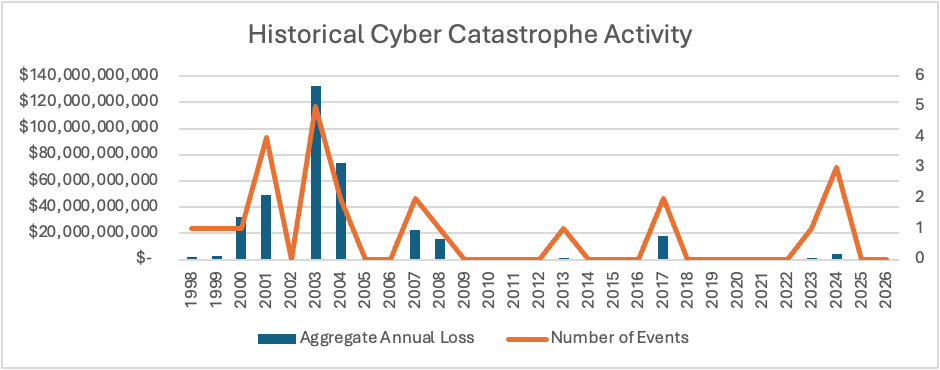
In June 2017, a cyber attack spread malware across government, utilities, commercial, and financial websites across Ukraine and more than 60 other countries. In February 2018, the UK and US governments attributed the attack, since dubbed "NotPetya," as a Russian military operation. It’s been called (perhaps hyperbolically)

The Strategic Use of Drones in Pakistan–India Irregular Warfare

The rapid spread of unmanned aerial systems (UAS) has changed the dynamics of the India-Pakistan rivalry. Instead of manned airpower and attritional land exchanges, the competition is now based on cheap precision, constant surveillance, deniable force, and escalation ambiguity. Drones of all types are now used constantly along the militarized

Arming Kurdish Resistance Fighters in Iran with Drones

✉️ Email header below is auto-generated from this post’s author tag. It only appears in the newsletter — please don’t edit or delete it. CNN reported on March 3rd that the Central Intelligence Agency had begun arming the Kurdish resistance as a ground force to support Iranian resistance. The situation

Preserving the American Edge: Revitalizing the Defense Industrial Base

✉️ Email header below is auto-generated from this post’s author tag. It only appears in the newsletter — please don’t edit or delete it. Episode 147 of the Irregular Warfare Podcast examines the past, present, and future of America’s defense industrial base—and why its strength may determine the

Drone Warfare in Ukraine: Myths and Reality

The European Programme of the Irregular Warfare Initiative is proud to present another episode of the Notes from the Eastern Front: Lessons from the Russo-Ukrainian War series. The discussion is hosted by Ukraine Hub Lead, Armenak Ohanesian, and Dr Olga R. Chiriac, Europe Programme Director. Our guest is Ivan Grys,

Cognitive Warfare and the Indo-Pacific

Editor’s Note: This article was submitted as part of the Irregular Warfare Initiative’s 2025 Writing Contest, in which authors were invited to explore how the United States and its partners can use irregular warfare to strengthen security cooperation, build trust, and enhance resilience among Indo-Pacific nations. This article

Showing of 37 posts

Bridging the gap between irregular warfare scholars, practitioners, and policymakers.

Stay in the Loop

Subscribe for the latest articles, podcasts, and events.

Subscribe

Our Work

Technology is evolving in months, while defense organizations often take decades to adapt. This growing gap leaves practitioners in a dangerous reality: forced to make irreversible decisions in high-stakes environments without clear doctrine or updated ethics training. The Emerging Technology and Irregular Warfare Focus Area was created to bridge this divide by connecting the people closest to the challenges and building a community that learns faster than our adversaries.

Strategic Tensions & Core Dilemmas

We move beyond the tools themselves to analyze the friction generated when new technologies—from AI and autonomous systems to crypto and biotech—are embedded in irregular warfare. Our work focuses on four core dilemmas:

  • Decisionmaking & Accountability: Reshaping decision dynamics in decentralized environments while maintaining political control and mitigating civilian harm.
  • Diffusion & Escalation: Addressing how low-cost, high-impact technologies enable nonstate actors to evade intelligence and exploit deniability.
  • Legitimacy & Effectiveness: Navigating the tension between operational success and public legitimacy as capabilities outpace existing laws.
  • Influence & Trust: Leveraging technology for humanitarian effectiveness while countering adversary efforts to undermine trust through algorithmic bias and misinformation.

Our Operating Principles

We are not interested in technology in search of an application. Our efforts are guided by three functional pillars:

  1. Problem-driven: We start with the friction points practitioners face on the ground. When existing doctrine is ignored, we seek to understand why and identify practical solutions.
  2. Whole-of-Society Perspective: Technology in the gray zone reshapes populations and creates long-term dependencies. We utilize a systems approach to ensure technological impacts align with broader strategic objectives.
  3. Future-focused: We prioritize anticipating what’s coming next over merely analyzing last year’s conflict, ensuring we stay ahead of emerging tactics and dilemmas.


Meet the Team

Jeffrey Szuchman Jeffrey Szuchman Co-Director, Emerging Technology
Kristina Kempkey Kristina Kempkey Co-Director, Emerging Technology
Aidan Harte Aidan Harte Advisor, Emerging Technology
August Cole August Cole Senior Advisor, Emerging Technology
Hugh Harsono Hugh Harsono Advisor, Emerging Technology
Jason Alexander Jason Alexander Advisor, Emerging Technology
Matt Sansone Matt Sansone Advisor, Emerging Technology
Noah Flessel Noah Flessel Advisor, Emerging Technology
Steve Feldstein Steve Feldstein Senior Advisor, Emerging Technology