Since its publication in 2020, the Resistance Operating Concept (ROC) has become a foundational resource for understanding how states can organize, enable, and sustain resistance in the face of occupation. It provides a shared vocabulary, planning framework, and operational logic for resistance activities. Yet the ROC is primarily oriented toward wartime conditions, particularly scenarios in which an adversary has already seized territory. This raises a more immediate question: what comes before resistance?
Across Europe and beyond, governments are increasingly confronting hybrid threats that operate below the threshold of armed conflict—disinformation, political subversion, infrastructure disruption, and covert coercion. These activities are designed not only to weaken states over time but also to enable rapid territorial or political gains before a coherent response can be mounted. In this context, the central challenge is not simply how to resist occupation—particularly as the Russian Federation employs draconian population control measures in occupied Ukraine to suppress such resistance—but how to prepare societies to detect, disrupt, and withstand aggression before it succeeds. While elements of this approach exist under the broad concept of Total Defense, there is not a universal, operationally-focused guide that translates the idea into practical actions. Unlike the ROC, which offers detailed guidance for resistance planning, Total Defense remains unevenly defined, inconsistently implemented, and often confined to high-level policy discussions.
Scholars and practitioners have long examined variations and effectiveness of Total Defense concepts—ranging from formal national doctrines to localized leaflets, such as “If the Invader Comes.” These booklets prescribe how societies should prepare for crisis and war. Building on this extensive body of work and on precedents such as the expert-driven development of the ROC, this paper proposes convening an international cohort of experts to produce a compact Total Defense manual: a practical, peacetime playbook that translates whole‑of‑society preparedness into concise doctrine, modular capability templates, legal authorities, and rehearsed activation procedures. While the critical mass of Total Defense scholars is in Europe, this manual could be implemented anywhere in the world.
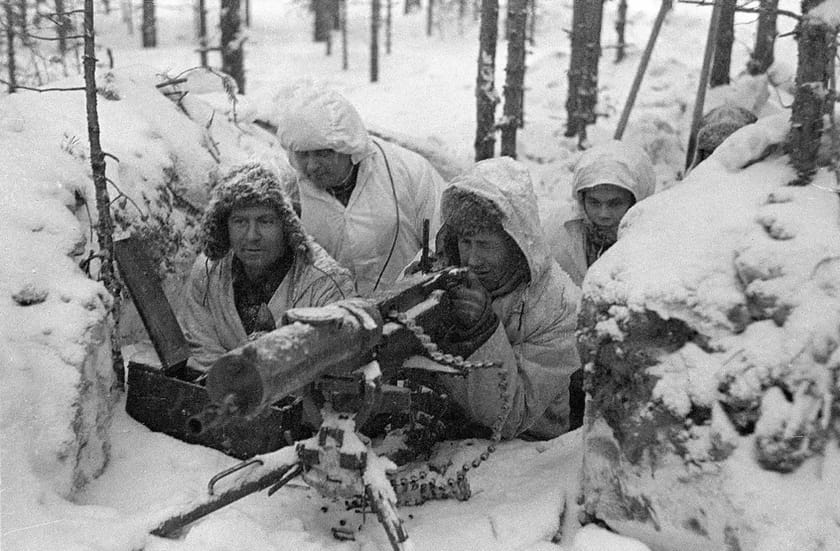
While contemporary events in Ukraine have generated extensive scholarly and policy debate about societal mobilization and hybrid warfare, historical cases offer equally instructive lessons about how preexisting civilian networks operate in practice. Finland’s experience in the Winter War (1939–1940) gives a clear example of how organized, rehearsed civilian participation, rather than improvised action, can impose operational friction on an invading force, preserve vital functions, and delay for military responses.
The Finnish Example during the 1939-1940 Winter War:
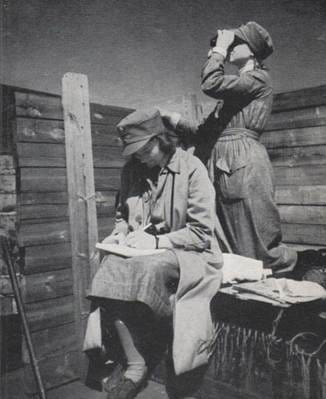
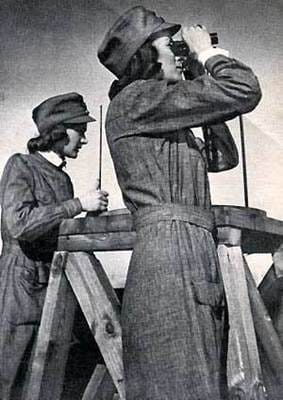
Volunteers of the Lotta Svärds carry out anti-aircraft observation roles during the Winter War.
”Sisters of Mercy and the Lotta Svärds on the battlefields, and women working tirelessly at home in order to provide equipment and food for the soldiers, Finnish women have worked hard everywhere, in all sectors…”
-General Carl Gustav Mannerheim, 1918
Finland’s response to Soviet aggression in the Winter War (1939–1940) illustrates how preexisting civilian defense networks can blunt an adversary’s early momentum and prevent rapid territorial consolidation. In the months before hostilities, Finnish society had organized and trained large numbers of civilians and reservists; this groundwork—including the regional mobilization of conscripts and extensive civil‑defense preparations—translated into operational advantages when invasion came. The Soviet offensive, launched after failed territorial negotiations and a staged false flag provocation, encountered not only harsh terrain and skilled Finnish ski troops but also a populace already prepared to support and sustain defense efforts. Although Stalin’s purges had degraded Soviet command effectiveness, the decisive friction for the invaders was the speed and coherence of Finnish mobilization.
The Lotta Svärd, a predominantly women’s voluntary organization, exemplified the practical effects of structured civilian participation. By November 1939, the organization had developed clear lines of authority, defined functional sections which included medical, provisioning, clothing, communications, and air surveillance. These functional areas were made even more effective through routine training. When war began, thousands of Lotta members moved rapidly from peacetime roles to operational tasks, providing medical support, sustaining logistics, maintaining communications, and staffing observation posts. Nearly 30,000 observers, similar to the British Royal Observation Corps, manned air‑watch positions across the country, forming a distributed early‑warning network that materially improved Finnish situational awareness despite technological inferiority.
Beyond these operational contributions, organized civilian action reinforced societal resilience. Lotta Svärd’s activities fostered community cohesion, sustained civil order during evacuations and air raids, and helped inoculate the population against demoralization and hostile information campaigns. In short, Finland’s experience demonstrates that when citizens are integrated into defense planning and rehearsed in peacetime, they become force multipliers—improving tactical outcomes, strengthening strategic endurance, and narrowing an attacker’s window for decisive action. By the end of the Winter War, the Lotta Svärd was the largest voluntary auxiliary in the world.
Finland’s experience shows that civilian integration is most effective when it is structured, rehearsed, and embedded in national defense planning before crisis occurs. These outcomes are not improvised; they depend on clear roles, established systems, and practiced coordination. Yet most states lack a practical framework for translating Total Defense from concept into implementation. In this regard, the ROC provides an important intellectual foundation. As a detailed and operationally grounded guide to resistance, which is an essential component of Total Defense, the ROC complements a broader Total Defense manual and offers a model for how such guidance can be developed, structured, and applied.
The Resistance Operating Concept as a Model for an International Total Defense Manual
The ROC offers a flexible and adaptable framework for governments and civilian populations to design effective resistance strategies to combat an occupying power. As a thorough planning guide, the ROC establishes a clear, operationally focused and standardized vocabulary that facilitates a shared understanding of resistance development, preparation, and execution. A comparable, comprehensive defense-focused manual could do the same thing for Total Defense. This manual would seek to build a “concept of comprehensive national defense” by articulating roles and responsibilities for different institutions to enable governments to “manage the interaction between the military forces and civilian authorities…for purposes of national security.” Although Total Defense may not immediately increase institutional resilience in the short term, its core features shorten decision cycles and improve a state’s ability to detect, deter, and disrupt adversaries before they consolidate territorial gains.
Institutionalizing ROC-informed, Total Defense structures would enable governments to harness civilian contributions as routine national capabilities without eroding civil-military boundaries. Finland’s experience illustrates the importance of preexisting institutions: the Lotta Svärd was able to mobilize over 100,000 volunteers by the end of the Winter War precisely because it expanded an already established and organized structure, rather than building one from scratch under pressure. Contemporary examples reinforce this point. Local formations such as Norway’s Home Guard and Estonia’s volunteer units within the Estonian Defense League demonstrate how trained citizen forces can strengthen national defense while reinforcing public trust. Clearly defined roles, combined with regular training and integration, deepen civic commitment, enhance information resilience, and reduce vulnerability to hostile influence.
As seen with the Lotta Svärd ground-based aircraft observers, a key operational advantage of Total Defense is integrating civilian observation into formal situational awareness. The Lotta Svärd’s Anti-Aircraft Regiment provided early warning, enabling rapid military responses and civilian evacuations. Today, technology allows citizens to illuminate the battlefield even more rapidly. For example, Ukraine’s early use of Diia, which enabled real-time reporting, converted public inputs into actionable intelligence when paired with verification procedures, expert analysis, and secure information flows. Routine exercises that include civilians, local authorities, emergency services, and military liaisons ensure interoperability under stress. Redundant communications and analog fallbacks preserve reporting and command when centralized systems are degraded, creating feedback loops that inform both local response and higher-level decision making.
Packaging these practices into a compact Total Defense manual would translate proven resistance mechanisms into a peacetime playbook: standardized doctrine for reporting and verification, common exercise templates, legal oversight models, and technical guidance for resilient communications and data handling. Several European Allies, namely those of the Baltic Sea region, are following the war in Ukraine closely and already institutionalizing comparable capabilities. The Ukrainian mandate to resist and civil mobilization show how rapid societal activation complicates an aggressor’s plans and can deny a quick fait accompli.
Adapted for routine use rather than contingency alone, the manual would define standardized roles across civilian and military organizations, institutionalize citizen‑based sensing and reporting, and prescribe scalable communications and logistics solutions that would strain an adversary’s conventional response options. Normalized through recurring exercises and transparent oversight, these measures would close institutional seams, improve early detection and disruption of hybrid operations, and raise the cost and complexity of any adversary’s attempt at rapid territorial seizure.
To be effective, this Total Defense manual must be more than a conceptual product. It must be implemented, exercised, and adapted across diverse national contexts. While many European allies are already institutionalizing elements of this approach in response to the war in Ukraine, scaling these practices into routine capabilities will require sustained partnership, experimentation, and technical assistance. This is where U.S. Special Operations Forces can play a catalytic role. With deep relationships across Allied SOF, a track record of supporting resistance development, and operational insight into hybrid threat environments, U.S. SOF are uniquely positioned to advance Total Defense initiatives. But to do so meaningfully, they need the right tools.
U.S. SOF are constrained by authorities designed for narrower, episodic missions rather than sustained engagement with civilian institutions. Existing SOF authorities are designed for crisis response, resistance enablement, or traditional security cooperation, but not for routine collaboration with civil agencies, infrastructure operators, and non-military actors that Total Defense requires. As a result, SOF can advise, assess, and experiment, but often lack the legal and fiscal flexibility to resource, institutionalize, or normalize whole-of-society defense activities in peacetime. Addressing this gap will require a recalibration of authorities that balances speed, oversight, and scope. This would enable SOF to support civilian preparedness, fund low-cost resilience measures, and take part in recurring exercises without relying on emergency exceptions or ad hoc workarounds. Without such adjustments, SOF’s role in fostering Total Defense will remain constrained by authorities mismatched to the strategic environment they are increasingly asked to shape.
Total Defense for Modern Conflict
Modern conflict is increasingly defined by ambiguity, speed, and the deliberate exploitation of societal vulnerabilities. Adversaries are not waiting for conventional war to begin. They are shaping the environment in advance. They are probing institutions, manipulating information, and positioning themselves to achieve rapid gains before an effective response can be organized. In this context, the distinction between peacetime and wartime is less meaningful than the degree of preparedness within society. States that rely solely on reactive models of defense risk ceding the initiative at the outset of crisis.
The cases and concepts examined here point to a consistent conclusion: resilience is most effective when it is structured, institutionalized, and exercised before it is needed. Finland’s Winter War experience shows the operational advantages of preexisting civilian integration, while the ROC illustrates the value of clear, practical guidance in organizing complex defense activities. Yet a critical gap remains between these insights and their systematic application. Without a shared framework to operationalize Total Defense, many states will continue to face coordination challenges, unclear authorities, and underutilized societal capacity.
Bridging this gap requires more than incremental adjustments. It demands a deliberate effort to translate Total Defense from an aspirational concept into an actionable system. A compact, operationally focused manual offers a practical pathway forward. The following recommendations outline how such an approach can be developed, implemented, and scaled.
Recommendations
First, convene an international expert working group, which is made up of defense practitioners, legal scholars, civil‑security specialists, and allied state representatives, to draft a compact Total Defense manual. The manual should use the ROC as a model and provide a concise peacetime playbook that specifies doctrine, modular capability templates, legal authorities, and activation procedures. While many organizations could lead this effort, Special Operations Command Europe (SOCEUR) is particularly well-positioned. The organization’s role in the development of the ROC, operational engagements with Ukrainian Special Operations Command, and proximity to European institutions that have already championed Total Defense concepts provide operational credibility, subject-matter expertise, and access to regional partners. SOCEUR would not author the manual unilaterally but serve as a coordinating hub to facilitate multidisciplinary inputs, align military and civilian requirements, and promote interoperability standards. The working group should deliver a draft within 18 months. Similar to the ROC, this should include annexes with historical examples, considerations for how implementation will deviate based on national caveats, and a standardized training curriculum.
Second, institutionalize modular training and routine exercises that integrate civilian agencies, local governments, private‑sector critical‑infrastructure operators, and military units to validate interoperability and build societal readiness. This does not necessarily require the creation of new events. In fact, it would be more influential and more impactful to integrate willing citizens into longstanding events such as Trojan Footprint, Adamant Serpent, or even Steadfast Dart.
Third, expand U.S. Special Operations Forces’ authorities to support and resource partners in fielding low‑complexity technologies and modular resistance capabilities. This expansion should include legislative adjustments to allow SOF to engage in sustained collaboration with civilian institutions during peacetime, rather than relying on emergency exceptions. Dedicated funding mechanisms should be established to resource low-cost, high-impact technologies such as secure communications systems, unmanned aerial platforms, and modular kits to enable light, lethal resistance, ensuring flexibility to address emerging needs. Formal interagency collaboration frameworks can help integrate SOF with civilian agencies, private sector partners, and academic institutions, enabling joint planning and execution of Total Defense initiatives.
Finally, prioritize redundant, resilient communications (including secure messaging and analog fallbacks) to preserve command, control, and reporting when centralized systems are degraded. There must be tremendous emphasis on digital force protection and survivability when integrating high-tech communications solutions. Finally, set up a standing Total Defense council to coordinate doctrine, exercises, legal frameworks, and public communications, and implement a targeted public‑engagement campaign that frames Total Defense as civic preparedness and clarifies legal safeguards.
Taken together, these measures will make societies faster to detect and respond, less susceptible to manipulation, and more costly for adversaries to target. A concise, collaboratively developed, ROC‑informed Total Defense manual provides a practical pathway to institutionalize whole‑of‑society resilience and to deny would‑be aggressors the opportunity for rapid, decisive advantage.
Dalton T. Fuss is a US Army special forces officer assigned to 10th Special Forces Group (Airborne). He received a Master of Arts in International Relations from Johns Hopkins University’s School of Advanced International Studies and an undergraduate degree from Texas A&M University. His work explores how emerging technologies are shaping the future of irregular conflict.
The views expressed are those of the author(s) and do not reflect the official position of the Irregular Warfare Initiative, Princeton University’s Empirical Studies of Conflict Project, the Modern War Institute at West Point, or the United States Government.
If you value reading the Irregular Warfare Initiative, please consider supporting our work. And for the best gear, check out the IWI store for mugs, coasters, apparel, and other items