The United States should employ cyber corsairs to deter exploitation and attacks in the cyber domain. Malicious activity such as economic espionage, ransomware attacks, and fraud results in trillions of dollars’ worth of damage. The targets of these attacks range from businesses and hospitals to government infrastructure. Much of this activity is attributed to cyber actors supporting Russia, Iran, the People’s Republic of China (PRC), and North Korea. The immense economic harm inflicted through adversary cyber operations contributes to the steady erosion of American technological, economic, and military dominance while enabling nefarious regimes. These actions demand a response beyond the ineffective cycle of criminal indictments, sanctions, and diplomatic demarches that fail to deter hostile actors. Today, the private sector is left to play defense in a world where the attacker only needs to get lucky once, while the defender must succeed every time. President Trump recently issued a national security memorandum encouraging private companies to hack foreign cybercriminal groups. But this call to action does not go far enough. The U.S. should empower, direct, and incentivize cyber corsairs to retaliate againstand deter adversaries already prowling the cyber domain for their own digital prizes.
A Case for Privateers
The United States should pursue a strategy in which private cyber actors (“cyber corsairs”) deter and retaliate against cyber exploitation and attacks against the U.S. or U.S.-based companies rather than remaining confined to only playing defense. The cyber domain today resembles the maritime domain of the 1600s when the Spanish Empire, with its treasure, ports, and fleets, repeatedly suffered the predations of privateers and pirates, unable to deter or prevent these attacks due to a rigid hierarchy. The British did not have a large fleet in the 1600s to compete with the Spanish but became famous for their use of privateers such as Francis Drake, Henry Morgan, and Woodes Rogers. These privateers played key roles in disrupting the maritime networks that financially supported the Spanish Empire and also contributed to the governance and defense of their island nation. Over time, these efforts relegated the Spanish Empire to a lower-tier power. This comparison of the cyber world to the 17th century is not new, and the parallels between the U.S., which pioneered the cyber domain with its free and open internet and created trillions of dollars of value, and the open seas of the 16th and 17th centuries are notable. Despite being pioneers of cyberspace, the U.S. remains vulnerable to the attacks of modern cyber pirates sponsored by adversaries who continue to operate in this cyber domain without fear.
The massive scale of malicious activity, specifically economic espionage, demands significant coordination between law enforcement and intelligence agencies, especially with the FBI claiming that a new PRC counterintelligence investigation opens every 10 hours. The justice system remains burdensome, however, since a law enforcement entity prosecuting a case of cybercrime or economic espionage must first conduct a successful investigation or intelligence operation, secure an indictment and eventual conviction, and arrange extradition. One successful example is the case of Roman Seleznev, who served ten years in prison for cybercrime following his arrest in the Maldives and transfer to Guam. Similarly, the first Chinese intelligence officer to ever be extradited and stand trial in the U.S. was convicted in 2021 of economic crimes and later released in an exchange in 2024.
Beyond the loss of intellectual property and economic impacts, the role of cyber in large-scale combat operations further demands the immediate leverage of cyber corsairs to deter adversaries. In peacetime, cyber corsairs could help to recover trillions of dollars of damages from intellectual property theft. At the same time, this would provide a new level of deterrence throughout the competition continuum.
Some critics argue that cyber privateering could cause unnecessary escalation, normalize privateering, and indicate that the United States has more to lose in cyberspace. While persuasive, these arguments are not enough to prevent the U.S. from employing digital privateers. First, cyber corsairs would not pose the same risk of collateral damage as their 17th century counterparts. The United States could set up systems to avoid or reduce collateral damage and prevent escalation. These arguments ignore the development of the information age and the numerous methods that could be used to minimize collateral damage and increase effectiveness. For example, a modern “privateering office” could vet and supervise cyber corsairs by pre-authorizing targets, imposing operational safeguards, and coordinating the controlled release of defensive countermeasures to industry to limit collateral effects and reduce escalation risks.
Second, the claim that the U.S. does not want to establish cyber corsairs as a norm overlooks the fact that our adversaries have already deployed their own private actors. These private actors can advance national objectives with greater speed, scale and flexibility than government actors by attracting top talent with competitive compensation, raising private capital and rapidly adopting emerging technologies. Third, the argument that the U.S. has more to lose in cyberspace is no longer valid as adversaries have become equally dependent on the cyber realm for their own economic prosperity, military capability and even repressive infrastructure.
The Economics of Cyber Privateering
The U.S. could incentivize the employment of cyber corsairs through the trillions of dollars in damages from cybercrime that benefit pariah regimes and large state-owned enterprises. Even a small portion of recovered funds could be a recipe for a dynamic billion-dollar industry. Companies within this industry could be expansions or spin-offs of current cybersecurity or cyber forensic providers, or small, lean startups staffed by information technology personnel, cyber sleuths, and white-hat hackers to recover millions, perhaps billions of dollars. The cyber privateering industry would also benefit the U.S. overall since any company would have a unique and potent response to any theft, attack, or exploitation of its networks while reducing the need for a U.S. government response.
Cyber privateering could also provide a means to address fraud at the domestic and international levels. In domestic cases, cyber corsairs could play crucial roles in identifying fraudsters and partnering with law enforcement to seize fraudsters’ assets in exchange for a portion of the recovered funds. In international cases where extradition is unlikely, cyber corsairs could support the U.S. Treasury’s Office of Foreign Assets Control (OFAC) and attempt to seize as much money as possible, with the possibility of being compensated with a share of any recovered funds. This system would be far less costly than the current method and permit the U.S. to better target nefarious actors, thus reducing the burden on financial institutions and government bureaucracy.
A Legal Case for Cyber Privateers
Article I, Section 8 of the U.S. Constitution states that Congress shall have the power “To declare War, grant Letters of Marque and Reprisal and make rules Concerning Captures on Land and Water.” These letters of marque and reprisal authorized private actors to seize enemy property. More than two centuries later, there remains a need to amend the U.S. Code to allow the government to issue letters of marque and reprisal to seize assets associated with sanctioned or hostile powers in the cyber domain. While the U.S. government has already demonstrated the ability to recover Bitcoin tied to a ransomware group, cyber corsairs would increase flexibility and deterrence. Moreover, cyber corsairs will impact adversaries by degrading and disrupting their cyber operations.
A Proposed System for Empowering and Employing Cyber Corsairs
The United States must establish a modernized framework to meaningfully employ cyber corsairs across the competition continuum. This framework could facilitate the pre-adjudication of targets, enable the rapid approval of operations, and permit the prompt seizure or liquidation of targeted assets necessary to sustain scalable cyber campaigns.
To effectively employ cyber corsairs, the United States should establish a centralized federal authority to vet, license, and oversee authorized private cyber operators conducting actions below the threshold of armed conflict, ideally under Title 50 authorities. Congress could establish an interagency entity to issue, administer, and oversee letters of marque and reprisal while coordinating with government stakeholders to deconflict targets and cyber operations. This would permit federal entities with overlapping cyber responsibilities, such as the Departments of Defense, Justice, and Homeland Security, to establish Cyber Corsair Offices that recruit and coordinate private partners against targets the government lacks the resources or incentives to pursue directly. This model could generate new revenue streams to expand agency capabilities, but it would also risk duplication, inefficiency, and interagency deconfliction challenges.
Further, the U.S. needs a modern Letter of Marque bill that permits cyber corsairs to be levied against hostile foreign entities. Similarly, federal agencies could develop performance-based contracting that pays out based on the value of disrupted, seized, and forfeited hostile assets. For example, the Department of the Treasury’s OFAC could contract firms with the capability to conduct cyber operations to identify and trace hidden assets tied to sanctioned entities. In another example, USCYBERCOM could develop new flexible deterrent and response options by engaging cleared firms to identify financial assets tied to entities beyond the reach of sanctions and devise operations to enable the disruption or seizure of assets.
Digital Privateers for a Digital Age
In the 18th century, the U.S. issued letters of marque and reprisal to allow privateers to seize the assets of enemies, thus increasing its naval combat power and placing added pressure on its adversaries. In the information age, cyber corsairs could have a similar effect. To incorporate cyber corsairs into a broader U.S. strategy, policymakers should explore how they can authorize cyber corsairs, identify valid prizes, adjudicate targets, enable execution, and facilitate liquidation of assets to maximize scalability. The ability to employ cyber corsairs across the competition continuum offers a low-cost, high-impact means of contesting the cyber domain, deterring adversaries, and preserving U.S. freedom of action in other domains.
Luke Alsip is a writer, researcher, business owner, and U.S. Navy Reserve officer with more than 15 years of intelligence experience. He is president and founder of The Privateer Project, where he explores public-private approaches to national security, irregular competition, and modern privateering across multiple domains.
The views expressed are those of the author and do not reflect the official position of the Irregular Warfare Initiative, Princeton University’s Empirical Studies of Conflict Project, the Modern War Institute at West Point, the Department of the Army, Department of War, or the United States Government.
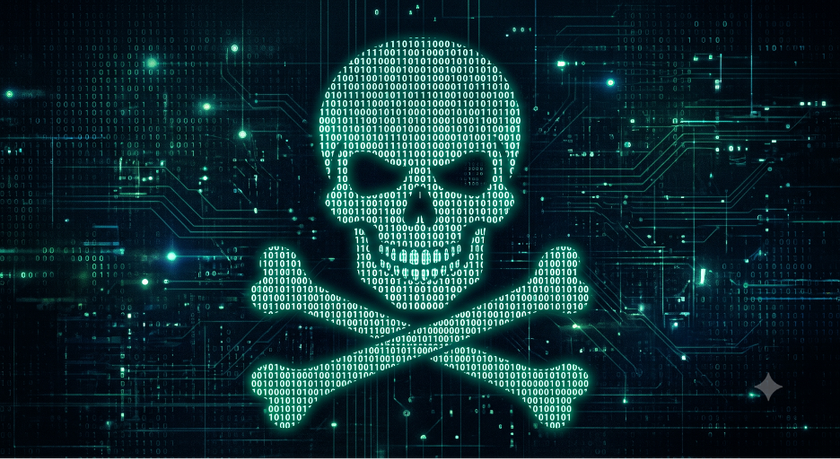
Main image created by Google Gemini, August 2, 2026.
If you value reading the Irregular Warfare Initiative, please consider supporting our work. And for the best gear, check out the IWI store for mugs, coasters, apparel, and other items.