In contemporary strategic competition, irregular warfare is increasingly prosecuted on financial terrain beyond the physical battlefield. While often viewed as a law enforcement or intelligence responsibility, the operations of cartels are more consistent with irregular warfare: they control populations and territory including strategic locations such as ports, distort the legitimate economy, weaken legitimate governance and institutional authority, and create instability and vulnerability that can be exploited by both state and non-state adversaries. These effects are enabled not only by violence, but also advantaged by the ability to move, store, and deploy financial resources at speed and scale.
For the Department of War, this reframes the financial domain from solely being a law enforcement or intelligence focus to a tactical and operational one. Cartels and their financial enablers establish a parallel financial system that creates both vulnerabilities and opportunities. Understanding how these illicit financial systems operate – how supply and demand are matched, how value moves across borders without detection, and how financial flows translate into operational capability – is essential to competing effectively for legitimacy, influence, and control.
Scale of Global and Cartel Illicit Revenues
Globally, illicit financial activity exceeded $4.4 trillion in 2025, an increase of 30% over the previous two years. Crimes that generate the highest illicit revenues include drug trafficking ($1.1 trillion with 17% growth) and human trafficking ($528 billion and 24% growth).
Transnational criminal organizations (TCOs), also referred to as cartels, are key drivers of this illicit activity. For example, they are the main producers and suppliers of illicit drugs to the United States. Cartels also generate revenues from human trafficking and human smuggling, illegal wildlife trade, illegal mining, fuel theft and oil smuggling, fraud, extortion, and many other crimes.
As these are illicit activities, those involved seek to hide the crimes and their proceeds, so there is no comprehensive dataset quantifying the illicit economy. However, the available estimates and assessments indicate that cartel revenues can be measured in billions of dollars. For example, the convictions in the United States of Sinaloa cartel leaders, “El Mayo” and “El Chapo,” required them to forfeit the proceeds of their crimes as well as serve prison sentences. The forfeiture for Ismael “El Mayo” Zambada was $15 billion and the forfeiture for Joaquin “El Chapo” Archivaldo Guzman Loera was was $12.6 billion. These are just two individuals in a single cartel.
Laundering illicit proceeds
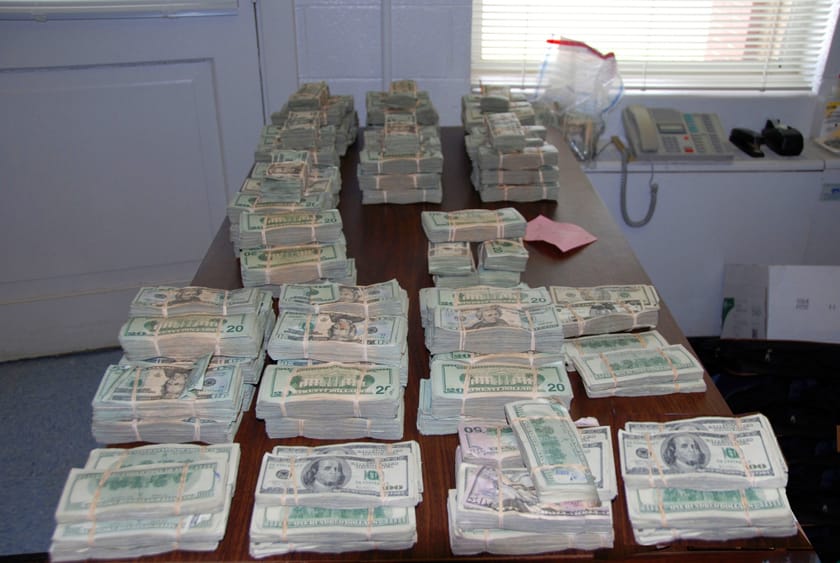
Illicit revenues require money laundering to obscure their illicit origin and make them appear to have come from legal sources. Criminal networks that generate substantial revenues, such as large volumes of cash from narcotics sales, must use sophisticated methods to make it more difficult to “follow the money.”
To introduce the funds into the financial system without attracting attention, money launderers use methods such as breaking large amounts of cash into smaller amounts to minimize attention when depositing it at banks, changing the cash into other forms such as checks, or moving the cash in bulk to countries or institutions with weaker controls and less scrutiny. Once funds are in the financial system, money launderers attempt to break the financial trail by moving them between different bank accounts or different countries, converting them to and from cryptocurrencies, disguising them as payments for goods or services, or changing them into non-financial forms such as real estate.
Meanwhile, financial institutions, law enforcement and government authorities are responsible for identifying, investigating, and countering illicit activity. One way they do this is to use “red flags” to identify unusual activity which triggers further investigation. For example, cross-border wires to jurisdictions at higher risk of cartel activity are a red flag for attempts to repatriate criminal proceeds from locations where narcotics are sold, back to the cartels.
Illicit Finance and Irregular Warfare
These financial flows are not just about money: illicit revenues provide cartels with the resources to control territory and populations, influence political decision-making and undermine state authority, disrupt legitimate economic activity and corrupt public institutions. Cartels and their operations also cause the deaths of thousands of people every year, whether from homicides in Mexico or drug overdoses in the United States.
The result is financial instability and personal vulnerability, along with a desire for status and belonging, that provides a foothold for adversarial influences and recruitment into cartels; constraint of markets and movements where cartels hold strategic territory such as ports and border crossings; and the potential to use these financial resources to drive expansion of cartel activity in narcotics “consumer” countries such as the United States.
For cartels, methods that minimize detection and accelerate laundering speed mean that more money is available, more quickly, to “reinvest” in their operations. This is where professional money launderers, particularly Chinese Money Laundering Networks (CMLNs), have identified and capitalized on cartel demand for laundering.
Professional Money Launderers
As the financial industry, law enforcement, and other authorities become increasingly effective at detecting and disrupting illicit financial activity, money laundering correspondingly also requires more skill.
Professional money launderers are defined as individuals, organizations, or networks, who – for a fee – help criminals launder the proceeds of crime. Professional money launderers often specialize only in money laundering, rather than being involved in the underlying crimes such as narcotics trafficking, and often work for more than one criminal organization. This enables them to achieve specialization and financial scale, meaning they can provide more extensive services and multi-national geographical reach, as well as offering enhanced methods to evade detection. For example, a Venezuelan money launderer indicted in January 2026 by the U.S. Department of Justice allegedly integrated cash deposits at banks, cryptocurrencies, and shell companies to launder an estimated $1 billion from criminal activity and sanctions evasion across multiple countries, spending thousands of dollars each month on technology to identify and avoid potential detection of his activities.
While cartels still launder their own cash, Chinese Money Laundering Networks (CMLNs) have rapidly gained “market share” and are the dominant professional money launderers. CMLNs match the supply of cartel cash that requires laundering in the United States, such as narcotics proceeds, with demand from Chinese nationals for U.S. dollars (USD) and other western currencies. This demand is driven by “capital flight.”
Capital Flight from China: Matching Supply and Demand
“Capital flight” is defined as the outflow of large amounts of funds or assets from a country, often driven by political or economic factors. Capital flight from China was estimated at $516 billion per year in 2024 to all countries globally (not just to the United States).
China imposes restrictions which permit only the approximately $50,000 (currency equivalent) per person per year to be moved outside China. However, wealthy Chinese nationals want to move more. The drivers include a desire for investments outside China such as real estate, to fund tuition or living expenses for their children studying overseas, crackdowns on private enterprise, or geopolitical uncertainties and the potential for military conflict in future. Unable to use the legitimate financial system – where governments can enforce capital controls – they turn to illicit underground services operated by CMLNs.
For CMLNs operating in the United States, this creates a business opportunity: the demand from Chinese nationals for USD can be matched with the supply of cartel cash that needs to be laundered – and CMLNs charge fees to both sides of the transaction.
CMLNs: A Key Enabler for Cartels
Focusing specifically on the scale and volume of CMLN activity in the United States, regulatory filings by financial institutions reported $312 billion in suspicious activity potentially associated with CMLNs over the five-year period from 2020-2024. Whereas cartel launderers usually charge fees of 5-10% or more, CMLNs charge cartels 0.5-2% or even less. CMLNs can offer low fees to cartels because their main profits come from charging high fees to Chinese nationals, estimated at 10% or more in 2024.
In addition to competitive pricing, CLMNs offer advantages compared to other launderers: they are fast, may absorb losses or offer guarantees of delivery, and can handle large volumes of cash. As they operate at scale and specialize in laundering, CMLNs provide sophisticated services to meet market demand, adapt to evade detection, and improve efficiency and client service.
Two examples illustrate the scale and sophistication of CMLNs.
Mirror transfers
Mirror transfers are a method of moving value across borders rather than moving money. They represent an evolution in informal value transfer systems such as hawala. As shown in the diagram steps (1) and (2), CMLNs in the United States accept cash from cartels – such as the proceeds of narcotics sales – and deposit it at U.S. banks, often using money mules for this task. They may also attempt to obscure the illicit source of the funds by moving them between institutions or accounts (3). CMLN brokers negotiate the sale of USD to Chinese nationals seeking currency in the United States (4). When the deal has been agreed, the Chinese national transfers Renminbi (RMB) from their bank account in China to a CMLN-controlled bank account in China (5). The CMLN broker then releases the equivalent in USD to the beneficiary in the United States nominated by the Chinese national (6). To complete the cycle and repatriate the funds from the bank accounts in China to cartels operating from Mexico, the RMB can be used to purchase precursor chemicals, which are then shipped to Mexico to manufacture narcotics, or other commercial goods exported to Mexico and sold.
Using the mirror transfer method, the value moves from the USA to China, but the money does not move across borders: the USD stay in the United States and the RMB stay in China. There are no cross-border wire transfers to attract attention from financial institutions. Instead, the only links between the two sides of the transaction are encrypted chat messages. Subsequently, trade in physical items is used to move value from China to Mexico, again avoiding cross-border wire transfers. The cartel has repatriated the proceeds from illicit activity in the United States via China to Mexico, and the CMLN has generated revenues from both sides of the transaction.
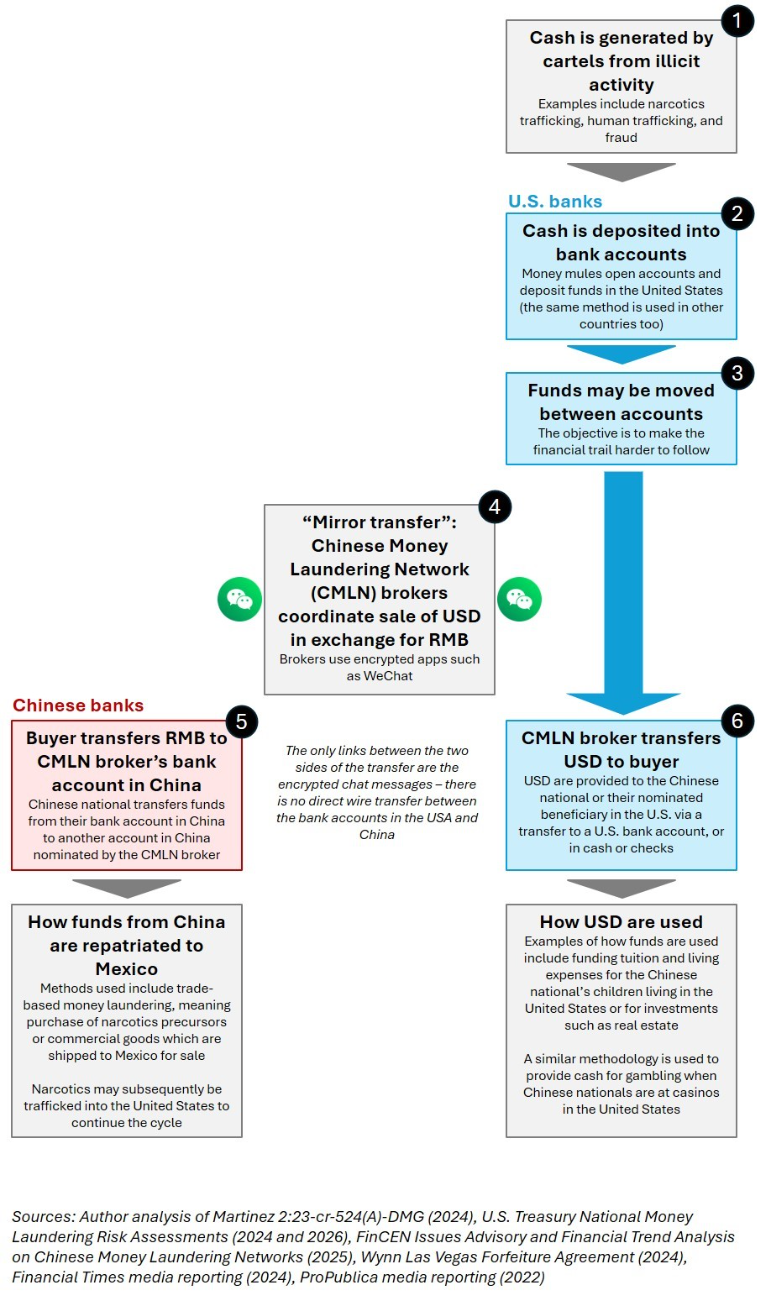
Figure 1: One of the mirror transfer methodologies used by CMLNs to launder cartel proceeds
Crypto
While less than 1% of global crypto transactions were illicit in 2025, this still represented more than $150 billion in illicit flows. CMLNs’ scale of crypto laundering has grown from $0.08 billion in 2021 to $16.14 billion in 2025. CMLNs now process an estimated 20% of all illicit crypto activity, more than $44 million per day in 2025. The rapid rise in volumes and market share indicates the rise of CMLNs as professional launderers, as well as their adaptability to use new methods like crypto.
In addition to mirror transfers and crypto, CMLNs also use many other methods to launder funds including real estate, trade and imports/exports, luxury or high value shopping (“daigou”), healthcare fraud, casinos, front and shell companies, and many combinations.
With CMLNs providing fast, efficient, and competitively priced laundering services, cartels have more money available, more quickly, to accelerate their operations. These funds can be used to bribe officials or law enforcement, acquire weapons to use against authorities, or undercut legitimate businesses.
Bankers as Irregular Warfare Practitioners
Cartels and CMLNs present an irregular warfare problem in which illicit financial systems enable territorial control, corruption of institutions, disruption to communities and economies, and the sustained projection of adversarial influence. Action taken in response already encompasses Treasury, law enforcement, intelligence, and the financial sector, including formal taskforces and interagency cooperation. There is potential to further extend this action within the Department of War, where the value of financial industry knowledge has already been recognized through initiatives such as the Economic Defense Unit.
Focusing specifically on cartels and CMLNs, the financial system is operational terrain. The starting point for the Department of War is to recognize that cartels require a different response than the approaches to “threat finance” that have been shaped by action against terrorism. Even when cartels are classified as terrorist organizations, in practice they operate very differently. In contrast with terrorist networks which are ideologically motivated, cartels and CMLNs are financially motivated. They diversify to offer new products and services, expand into new geographic markets, use scale and pricing to undercut their competitors, establish affiliations to gain new revenue streams, and capitalize on business opportunities. These characteristics are more comparable with the operations of a legitimate financial institution than a terrorist network. As a result, effective action requires not just intelligence and law enforcement, but also a commercial mindset on how financial systems actually function.
To counter adaptable illicit finance actors, the Department of War should establish an exploratory capability to introduce new perspectives into operational and tactical military problem sets, and through this to create the conditions for adaptation.
Firstly, it should include financial industry experts – those with real-life professional experience in commercial banking – into planning and wargames. By playing the part of commercial banks or illicit actors, the wargame can better assess the impact on the financial system, minimizing unintended adverse consequences when planning meets reality.
Secondly, bankers could provide tactical and operational advisory services, for example to Special Operations Forces (SOF) operating in cartel-controlled or CMLN-influenced locations. Bankers already have experience in some of these locations. Financial institutions operate globally, including in high risk and contested geographies. They finance infrastructure, provide banking services to businesses, and enable remittances. This provides them with familiarity with communities and sentiment, knowledge of and access to influential individuals, and first-hand experience of locations and projects. For example, bankers leading a project to finance a mining project may visit the site to verify the progress of construction and confirm that funds are not being misappropriated. These insights can directly inform SOF operations in these contested locations. Financial industry experts could also provide advice adapted to specific mission requirements, like use of crypto for covert payments.
Thirdly, financial industry knowledge can also be applied in unconventional ways, as proven on the battlefield. In Ukraine, a former grain trader who previously worked in financial services in London applied his business intelligence experience to improve the effectiveness of the drone kill chain. These outcomes were not achieved through formal and structured planning with pre-defined outcomes: they were the result of introducing non-traditional experience into a new environment and allowing it to adapt.
In an environment where financial systems – both legitimate and illicit – support non-state actors, expanding military activity into the financial terrain is not optional. It is a necessary step to competing effectively.
The views expressed are those of the author(s) and do not reflect the official position of the Irregular Warfare Initiative, Princeton University’s Empirical Studies of Conflict Project, the Modern War Institute at West Point, the United States Government, or the United Kingdom Government.