In May 2025, the Kurdistan Workers’ Party (PKK) announced it would dissolve and lay down its arms, closing an insurgency that had cost Türkiye on the order of forty thousand lives. The timing poses a puzzle. Ankara did not end the war at a moment of exhaustion or stalemate. It ended near the peak of its surveillance-and-strike dominance, and the blow that halted the fighting was not a drone or a raid, but a political process opened by an improbable nationalist sponsor. Why would the PKK quit a forty-year fight at the exact peak of enemy pressure, when earlier overtures, attempted under far less duress, had failed? The answer is convergence: sustained pressure and an open political door arrived together, and neither alone would have ended the war.
The paradox dissolves once we are precise about what intelligence did and did not do. Having followed this campaign from within Türkiye’s policy world, I read the PKK’s disbandment less as a surrender than as a calculation. The machine Türkiye built after 2016 never defeated the group. It did something narrower. It made fighting so costly and so unlikely to lead anywhere that walking away became the PKK’s rational choice. But raising the cost of a war is not the same as ending one. Surveillance and precise strikes could push the insurgents toward an exit, but they could not build it. The exit was a political construction, opened by other hands. A settlement needed both at once.
The Machine Ankara Built
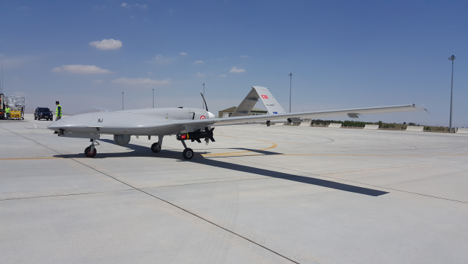
The inflection point was September 2016. The first armed Bayraktar TB2, carrying precision micro-munitions, then entered service against the PKK, followed by an armed variant of the larger ANKA platform. The significance lay less in the munitions than in the loop they closed. A single aircraft could now watch a valley for most of a day, identify a target, and – once cleared– strike it. The shift did more than lower the cost of killing. It removed a cost imposed by the old method. Reaching militants once meant closing to direct contact, where the first exchange or an ambush could inflict casualties. Persistent surveillance removed that exposure. A militant who broke cover became a target without anyone hunting him on foot. The loop compressed hours or days of staff work into a single, continuous act.
What made it decisive was integration with the older, slower disciplines of intelligence. In counterinsurgency, locating a vehicle means little; the operative question is who is inside it, a regional commander or a courier. That knowledge came from human sources, intercepts, and partners. In northern Iraq, the Kurdistan Democratic Party gave Ankara battlefield intelligence on PKK movements, and Turkish agencies took part directly in operations against the group.
The cumulative result was a campaign of leadership decapitation, visible in independent tracking rather than official statements. Conflict-event data show Türkiye relying heavily on air and drone strikes, which let it reach senior PKK cadres beyond its earlier range. Crisis Group’s casualty database recorded that in 2021 more than a third of the 312 PKK militants confirmed killed were seasoned commanders, and the ratio of PKK to state-force fatalities had shifted markedly in Türkiye’s favor since July 2015. It was a lower-cost, more sovereign version of the targeted-killing approach the United States developed after 2001.
Two Readings, Both Partial
The disbandment invites two tidy explanations, and neither survives scrutiny. The first holds that airpower simply prevailed: surveillance and the steady killing of senior cadres exhausted the PKK, making dissolution a belated admission of defeat. Yet the scholarship on leadership targeting predicts the opposite for a group of the PKK’s type. Jenna Jordan argues that a group’s infrastructure, ideology, and social base determine whether decapitation works; where those are strong, removing leaders rarely destroys the organization. The PKK fits that profile: the organization remained social based, ideologically rooted, and across four decades. Attrition alone should not have ended it.
The second explanation reverses the emphasis, treating the settlement as a purely political achievement in which the drones were incidental. The process was set in motion in October 2024 by Devlet Bahçeli, an improbable sponsor given his nationalist record, and sealed by Abdullah Öcalan’s February 2025 appeal from prison to dissolve. Yet political will cannot explain the timing. Comparable overtures had been tried before, and had failed.
The persuasive case is comparative. Take decapitation alone. The conflict’s most consequential leadership strike was not a drone killing, but the 1999 capture of Öcalan in Kenya, aided by a US Intelligence tip. It produced what coercion theory predicts: Öcalan ordered a ceasefire and pulled PKK forces out of Türkiye. Yet his imprisonment, widely expected to dissolve the group, did not: the PKK resumed its insurgency in 2004. The most complete decapitation available bought a pause, not a peace.
Now take accommodation alone. It had been tried in secret first. High-ranking PKK leaders were meeting Turkish intelligence officers in Oslo, in talks that collapsed after the June 2011 elections. Between 2013 and 2015, Ankara held a real negotiation: the PKK declared a ceasefire in March 2013 and withdrew into northern Iraq, and the government set up a ministerial board to oversee the talks, which collapsed by July 2015. The withdrawal was never met by the reforms the PKK expected, and neither side faced a cost of walking away that exceeded the cost of compromise. An off-ramp unaccompanied by sustained pressure was an exit the insurgents could afford to refuse.
What distinguished 2025 was neither decapitation nor dialogue alone but their convergence. The intelligence-strike campaign was the durable element, raising the cost of staying in the field for nearly a decade. The more rigorous empirical work agrees. Patrick Johnston finds that leadership targeting is linked to shorter insurgencies and better outcomes, but only as part of a broader campaign. Intelligence did not destroy the organization, consistent with Jordan’s logic; it made continued armed struggle steadily less rewarding.
The limits deserve acknowledgment. The PKK’s internal deliberations are not observable, and one case cannot isolate one cause. Öcalan’s drift toward a decentralized democratic confederalism, the fall of the Assad government in late 2024, and the Kurdish movement’s electoral calculations all plausibly pushed the same way; that regional shock, in particular, may well have been the proximate trigger. My contention is narrower: sustained pressure was the durable condition that set the successful attempt apart from the failed ones. It did not suffice alone.
Why the Same Tools End Some Wars and Not Others
Why, then, have the United States and Israel wielded comparable tools for two decades without producing comparable capitulations? Because cornering works differently against different adversaries, and the PKK belonged to the category where it works best.
The United States killed Osama bin Laden and Ayman al-Zawahiri of al-Qaeda, and Abu Musab al-Zarqawi and Abu Bakr al-Baghdadi of the Islamic State. None of these removals terminated the organizations. Al-Qaeda decentralized and persisted. The Islamic State kept pre-designated successors ready and named a new leader within days of Baghdadi’s death. Jordan’s resilience model, applied at West Point, finds that older, religiously framed, separatist groups are the ones most able to absorb a leader’s loss.
The deeper obstacle is the adversary’s goals. The Islamic State’s aims were eschatological rather than negotiable: a movement that seeks the end of the world cannot be cornered into a bargain. Israel reached a similar conclusion about its own foes. Unable to defeat or settle with Hamas and Hezbollah, it adopted what its strategists call “mowing the grass,” periodic operations to degrade capability and restore deterrence. There, pressure buys stretches of quiet rather than a settlement.
The opposite extreme is instructive. Sri Lanka did end the Tamil Tiger insurgency, partly through decapitation, killing Velupillai Prabhakaran and his entire command in May 2009. But that ending came through a war of annihilation, an encircling conventional offensive that destroyed the organization rather than coercing it. It left a defeated enemy rather than a reconciled one and buried the underlying Tamil grievances rather than addressing them.
The PKK sat between these cases, and part of the difference was geographic. The Islamic State and al-Qaeda were transnational. The PKK, like the Tamil Tigers, lived inside borders a state could reach, and the corner holds only where the adversary lives inside it. Unlike the Islamic State, its goals were secular and political, and its imprisoned founder could still order a halt. Unlike Hamas, it could imagine an exit short of annihilation. The Turkish corner, therefore, had somewhere to lead, once a political door was opened. Washington and Jerusalem wield the same instrument. What differed was the adversary and the political option open to it.
The Boundary: The War That Did Not End
One qualification is indispensable: the insurgency has ended only inside Türkiye. The Kurdish-led forces in Syria, long tied to the PKK, said Öcalan’s appeal did not apply to them and pursued a separate accommodation with Damascus. The harder Türkiye squeezed the PKK at home and in Iraq, the more its cadres asserted themselves in Syria, a pressure-relief valve for the organization. One might object that the PKK quit the field at home not because fighting stopped paying but because its irreconcilable elements simply moved. Yet the readings fit together. The structure that disarmed was the Türkiye and Iraq-based one, and a Syrian refuge for those unwilling to stop is just what a settlement premised on the futility of fighting inside Türkiye would produce. It marks the boundary of the claim, not its refutation.
The incomplete domestic settlement reinforces the point from the opposite direction. A year after the announcement, the PKK had disarmed, dissolved its structure, and withdrawn, yet the negotiations had stalled over constitutional and amnesty questions that remain unpopular with the Turkish electorate. Intelligence could compel a ceasefire. It could not, unaided, furnish the bargain that renders a peace durable.
Implications for Practitioners
One implication reaches beyond Türkiye. The counterinsurgency orthodoxy pairs military pressure with a political path, assuming a state able to apply pressure will want to convert it into a settlement. The Turkish case unsettles that. The old worry was that counterinsurgents lacked the reach to pressure an entrenched, popularly rooted insurgency. A technology-enabled complex of the kind Ankara built removes that constraint without winning a single heart or mind and introduces a subtler hazard: not that the instrument fails, but that it succeeds cheaply enough to make a settlement look optional.
Türkiye sat in that corner for most of a decade before turning it into anything. The conversion, when it came, required an improbable domestic coalition rather than new hardware.
Therein lies the lesson for those who build these capabilities. The tool that makes an insurgency manageable is not the tool that ends one: when a war costs little to contain, the pressure to do the hard work of closing it fades. A state investing in surveillance and precision strike should therefore resource the political off-ramp, the negotiators, the legal framework, the amnesty terms, as seriously as the targeting cycle, and well before the corner is reached. Türkiye built the corner years before it began building the door, and that door is still only half-open. The harder task today is not cornering an adversary; it is refusing the comfort of leaving him there. States that mistake a manageable war for a finished one will hold the corner for years and call it victory.
Dr. Sertaç Canalp Korkmaz served as a security affairs specialist at the Presidency of the Republic of Türkiye from 2019 to 2024 and as an assistant researcher at the Center for Middle Eastern Strategic Studies (ORSAM) from 2016 to 2019. He also served as a visiting lecturer at the Turkish Military Academy from 2021 to 2024. He participated in the U.S. Department of State’s prestigious International Visitor Leadership Program in Spring 2024.
The views expressed are those of the authors and do not reflect the official position of the Irregular Warfare Initiative, Princeton University’s Empirical Studies of Conflict Project, the Modern War Institute at West Point, the Department of the Army, the Department of War, or the United States Government.
Main image is a Bayraktar TB2. Photo. Bayhaluk / Wikimedia Commons. CC BY-SA 4.0.
If you value reading the Irregular Warfare Initiative, please consider supporting our work. And for the best gear, check out the IWI store for mugs, coasters, apparel, and other items.