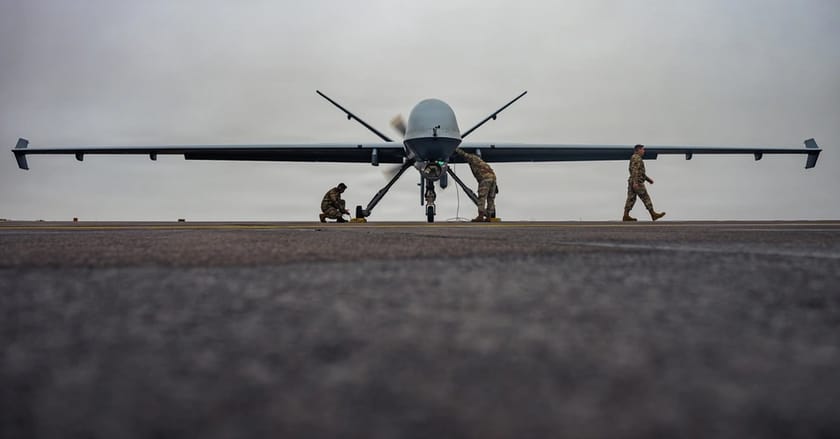
Episode 164 of the Irregular Warfare Podcast grapples with the hidden costs of precision warfare, looking at how drone strikes affect civilian populations well beyond their immediate lethal footprint. Anchored in a study using twelve billion geocoded cell phone records from Yemen, the conversation explores how drone strikes trigger sharp spikes in civilian mobility and rapid cascades of communication—disruptions on a scale comparable to major natural disasters—even when no civilians are physically harmed. Our guests unpack what these findings mean for the strategic logic of precision airpower, the tension between tactical accuracy and perceived legitimacy on the ground, and how policy tools—like the "near certainty" standard— shape how these strikes are planned and executed.
The full length article is here: Estimating the Impact of Drone Strikes on Civilians Using Call Detail Records. A shorter summary of the findings and policy implications is also available on IWI, here.
Dr. Aidan Milliff is an assistant professor of political science at The Ohio State University. His research examines how people interpret and respond to political violence. Aidan earned his PhD from MIT, where he was a member of the Security Studies Program.
Lieutenant Colonel Paul Lushenko, PhD, is a globally recognized expert on artificial intelligence, autonomy, drones, and counter-drone warfare and currently serves as Chief Strategist for the U.S. military’s counter-drone efforts. He is retiring from the U.S. Army after more than two decades of leadership, including extensive service in Special Operations Forces, and is the author of four books and dozens of peer-reviewed articles. His work as both a scholar and practitioner has helped shape the international debate on emerging technologies, autonomy, drones, and the future of warfare.
Alisa Laufer hosts this episode with Alexandra Chinchilla. Please reach out to the Irregular Warfare Podcast team with any questions about the episode or the broader mission of the show.
The Irregular Warfare Podcast is a production of the Irregular Warfare Initiative (IWI). We are a team of volunteers dedicated to bridging the gap between scholars and practitioners to support the community of irregular warfare professionals. IWI generates written and audio content, coordinates events for the IW community, and hosts critical thinkers in the field of irregular warfare as IWI fellows. You can follow and engage with us on Facebook, Twitter, Instagram, YouTube, or LinkedIn.
Subscribe to our monthly newsletter for (always free!) access to our written content, upcoming community events, and other resources.
All views expressed in this episode are the personal views of the participants and do not represent those of any government agency or of the Empirical Studies of Conflict Project.
Intro music: “Unsilenced” by Ketsa
Outro music: “Launch” by Ketsa