Armed men jumped off a helicopter to capture the Galaxy Leader. The Houthis took control of the ship in November 2023 as part of their campaign against Israel that eventually evolved to sinking two ships and the extortion of hundreds of millions of dollars in “Safe-Transit” fees. The United States responded with a series of escalating military attacks culminating in Operation ROUGH RIDER, which cost the United States an estimated $1-2 billion. As evidenced by the historical eras of state-sponsored privateering and commerce raiding, threatening shipping to impose cost on an adversary is not the sole domain of small, impoverished countries and non-state actors. Ukraine demonstrates that drones can counter a large-scale navy in major combat operations. The United States should invest in asymmetric naval warfare capabilities to field as part of an irregular warfare effort to impose costs during a protracted campaign against potential Chinese aggression in the Pacific.
Southeast Asia presents an opportunity for the United States to employ this tactic against a vulnerable China if protracted conflict should emerge from Taiwan or the South China Sea. Pursuing this as part of a cost imposition strategy supports National Security Strategy imperatives around burden sharing. The physical and economic geography of Southeast Asia provide suitable locations to apply pressure in a protracted campaign that becomes dictated by the ability to martial national resources more than the accomplishment of tactical military objectives. This article will outline why cost imposition makes sense, how China is vulnerable in Southeast Asia, and identify three ways to implement this strategy.
The Logic of Cost Imposition
Cost imposition strategies seek to cause an adversary to expend more resources to achieve their objectives than the opponent must expend to achieve theirs. During Operation ROUGH RIDER, the Houthis were particularly successful, frequently forcing the U.S. to utilize multi-million dollar interceptor missiles to defeat $2,000 drones. The Ukrainians have utilized a mix of low-cost drones and missiles to sink one-third of the Russian Black Sea Fleet. The United States could flip this formula by fielding low-cost technology such as unmanned maritime systems like the Ukrainian Magura class (~$50K) to deny Chinese military vessels such as the Luyang III destroyer (~$900M) access.
The impending arrival of the “Davidson Window”, the period of time identified by U.S. Indo-Pacific Command Commander, Admiral Philip Davidson, when China would be prepared to seize Taiwan militarily, brings urgency to this discussion. In the event that a conflict over Taiwan becomes protracted—whether due to a failure to fully seize the island or because the U.S. engages in a punishment campaign—cost imposition strategies provide U.S. policymakers with vital options. Since a prolonged conflict demands marshaling vast amounts of resources over time, forcing resource exhaustion on the adversary becomes a critical part of a successful strategy. Furthermore, leveraging asymmetric naval warfare capabilities unilaterally, with partners, or via third parties allows for calibrated escalation throughout the campaign.
Why Southeast Asia?
In 2003, Chinese President Hu Jintao coined the phrase the “Malacca Dilemma” to describe China’s reliance on shipping, particularly oil and natural gas, through the Strait of Malacca and its vulnerability to disruption by a foreign power. Today, approximately 80% of China’s oil transits through the strait in addition to two-thirds of all other Chinese maritime trade. China actively seeks to reduce its reliance on Malacca via pipelines in countries like Myanmar, the proposed Kra Canal in Thailand, and the China-Pakistan Economic Corridor by way of Gwadar Port. These projects face significant barriers to completion and will not provide sufficient capacity to replace shipping through Malacca even if finished. Concurrently, Russia serves as China’s single largest oil provider (~20% of Chinese oil imports), relying chiefly on overland or Pacific Ocean routes rather than traversing the Malacca Strait. Ultimately, these alternative routes only mitigate Chinese risk at Malacca; they do not eliminate it. Looking forward, while China aims to decrease its dependence on oil and natural gas, it will continue to rely on critical minerals from Africa that flow through similar trade corridors.
Southeast Asia’s geography particularly lends itself to disruption of shipping. For shipping to transit from the Indian Ocean to the Pacific, it must pass through one of a series of maritime chokepoints. While the Strait of Malacca provides the fastest route, the route narrows to 40 miles across at its narrowest point between Malaysia, Indonesia, and Singapore where the navigable channel is only 1.7 miles across. The alternatives to Malacca include the Sunda and Lombok Straits through the Indonesian archipelago or the Palawan or Luzon Straits through the Philippine archipelago. In addition to the chokepoints for maritime traffic, the distribution of islands provides a large number of positions to operate from under cover.
Geopolitically, Southeast Asia also presents multiple partners willing to work with the United States to counter Chinese military aggression. Chinese “Nine Dash Line” maritime claims in the South China Sea compete with claims by Brunei, Indonesia, Malaysia, the Philippines, and Vietnam. These disagreements create the incentive for those countries to invest in capabilities to deny Chinese vessels access to contested maritime areas.
Capitalizing on these disagreements, in April 2026 the United States and Indonesia signed a Defense Cooperation Agreement including additional special forces training, hosting of exercises, and “autonomous systems work”. Indonesia’s position beside the Malacca Strait makes this threat to China more realistic.
Even beyond Malacca, U.S. special forces are fielding unmanned maritime systems in the Luzon Strait (between the Philippines and Taiwan) to potentially attack maritime targets. The combination of Chinese vulnerability, geographic opportunity, and willing partners makes this region an unrivaled opportunity to pursue a cost imposition strategy.
How to Execute Asymmetric Maritime Warfare in Southeast Asia
Asymmetric maritime warfare provides scalability in a cost imposition strategy. This strategy comes in multiple forms, but generally consists of small force elements, utilizing low-cost tactics and technology to disrupt or deny the adversary’s logistics and military support activities. These actions fall squarely into the DoDI 3000.07 definition of irregular warfare: “a form of warfare where states and non-state actors campaign to assure or coerce states or other groups through indirect, non-attributable, or asymmetric activities”. While asymmetric maritime warfare is definitively irregular warfare, it differs from maritime unconventional warfare: rather than seeking to overthrow occupied territory or enable a resistance, this approach focuses directly on disrupting Beijing’s warfighting capabilities. These activities would be executed as a form of direct action operations. In the case of Southeast Asia, it could come in the form of utilizing uncrewed vehicles or small ships to disrupt or deny China’s ability to ship critical supplies such as oil. To support these types of operations, the U.S. will also require robust intelligence support to correctly target vessels bound for China. The U.S. maintains multiple options to execute this type of strategy.
Partner-Led Options
Partner-led cost imposition (as the Houthis did for Iran) provides a higher level of deniability at the lowest cost. The Philippines seeks to sign a deal with Ukraine to co-produce maritime uncrewed platforms to counter Chinese claims in the South China Sea. In line with the themes of the executive order on “Unleashing American Drone Dominance” and the easing of export controls, the United States military can work to export American manufactured unmanned systems to partner nations who wish to counter Chinese aggression in the region.
This option enables partners to act on their own with minimal U.S. involvement, but cedes ultimate control of when and how to act to those partners. Circumstances may arrive when the U.S. would prefer a partner to take action, but the partner does not share the U.S. perspective on risks and rewards. Inversely, the partner might take action at a time when the U.S. would prefer restraint. The advantage to partner led action lies in shifting the burden of escalation from the U.S. to China. The decision to escalate against U.S. forces in response to partner nation action would lie with China, not the United States.
U.S. Led-Options
At a higher level of attribution and escalatory risk, the United States can negotiate for access, basing, and field asymmetric capabilities themselves. During the 2026 iteration of the Balikatan exercise, U.S. Green Berets worked with the Philippine Coast Guard to sink a decommissioned commercial vessel. To execute a U.S. forward strategy, the U.S. would need further basing and training agreements with countries such as Indonesia, Malaysia, or Vietnam.
This poses a challenge due to the risk of escalation and the economic pressure that China brings to bear on those countries. The U.S. would need to offer significant counter-balancing on economic measures—to include lowering tariffs and increasing U.S. market access—and diplomatic efforts—ranging from Presidential visits to supporting welcome democratic efforts in Indonesia and Thailand. The United States would assume more control of executing initial actions while bearing more responsibility for any escalation.
Maritime Militias
At the highest level of risk and lowest level of attribution, the U.S. could work with Southeast Asian governments to establish maritime militia groups in the region modeled on China’s own maritime militias. Malaysian Dayak and Malay fishermen in Borneo and Indonesian Malays in Natuna both struggle with incursions from Chinese fishing groups. The U.S. should explore the possibility of training and selling weaponry to these groups. This exploration will require thorough analysis and oversight due to the complex legal framework surrounding freedom of navigation and piracy laws.
This option comes with significant risk due to low control and the threat to non-combatants. While the Houthis claimed to target Israeli and U.S. shipping, the group sunk Liberian and Greek vessels. This option presents a high risk to allies and partners who also rely on the Strait for critical shipping such as South Korea and Japan. The risks of this option would likely only outweigh the rewards if China gained significant advantage in conventional conflict. The United States should invest in all three capabilities: their relatively low cost and high flexibility expand options across a broad spectrum of operational contexts.
Conclusion
The U.S. National Defense Strategy supports burden sharing with partners to deter China along the First Island Chain. While the U.S. currently seeks to invest in large-scale conventional deterrence capabilities, the economics of this approach present a sustainability challenge and the use of these capabilities is inherently escalatory. Southeast Asia’s chokepoints offer an asymmetric advantage complementary to any conventional deterrence efforts physically located within the First Island Chain. By investing in scalable, low-cost maritime denial capabilities, either through partners or unilaterally, the United States can shift the burden of escalation on to China. This strategy provides U.S. policymakers with decision space to sever China’s critical supply lines at lower cost than a conventional naval blockade. Just like the Houthis did to us.
Caitlin Irby is a U.S. Air Force intelligence officer who has served in Asia, the Middle East, and Europe, conducting intelligence, surveillance, and reconnaissance operations. Of her 17 years in the Air Force, nine were spent supporting special operations. She holds bachelor’s and master’s degrees in geographic information science and has published articles on the role of geography in U.S. strategy.
The views expressed are those of the authors and do not reflect the official position of the Irregular Warfare Initiative, Princeton University’s Empirical Studies of Conflict Project, the Modern War Institute at West Point, the Department of the Army, the Department of War, or the United States Government.
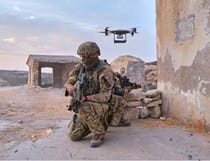
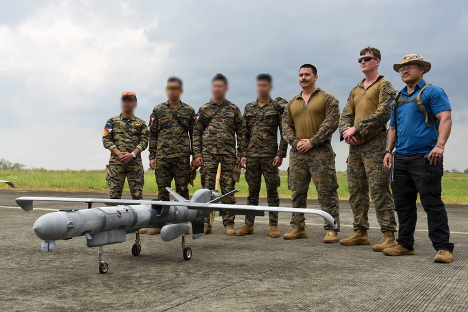
Main image is a DVIDs photo of 3rd Marine Littoral Regiment and Philippine Navy sailors with a Firestorm Tempest drone during Exercise Balikatan 2026, Lal-Lo, Philippines, April 24, 2026. (U.S. Marine Corps photo by Cpl Ernesto Lagunes)
If you value reading the Irregular Warfare Initiative, please consider supporting our work. And for the best gear, check out the IWI store for mugs, coasters, apparel, and other items.