





Emerging Technology

The Emerging Technology focus area connects the people closest to the challenge of deploying new technology and builds a community that learns faster than our adversaries. We move beyond the latest tools to analyze the friction generated when new technologies—from AI and autonomous systems to crypto and biotech—are embedded in irregular warfare.

The Future of War Part III: Strategic Sabotage in an Era of Great-Power

Episode 144 of theIrregular Warfare Podcast continues our four-part Future of War series with a focused examination of strategic sabotage, indirect action, and deterrence below the threshold of armed conflict. This episode centers on “Special Delivery,” a near-future short story by author and futurist August Cole, set in 2037 amid

The Cyber Wars That Weren’t

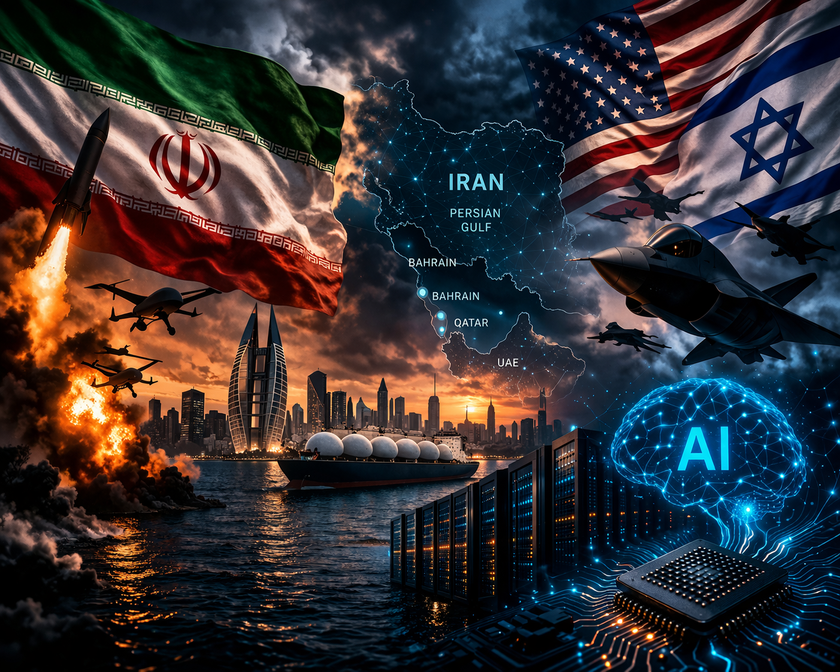
✉️ Email header below is auto-generated from this post’s author tag. It only appears in the newsletter — please don’t edit or delete it. At the onset of the Israel-Iran conflict, news websites warned the public of the possible collateral damage the Israel-Iran fight could generate in cyberspace. The ominous

Understanding Hybrid Threats: Insights from the Belgian Cyber Force Commander

This IWI Project Europe Fireside Chat examines Belgium’s perspectives on hybrid warfare, with a particular focus on cyber-attacks and information warfare. To do so, we welcomed one of Belgium’s key figures in the cyber domain: Major-General Pierre Ciparisse. Appointed in September, General Ciparisse serves as Commander of the

Chance and Necessity: Evolving the Supporting Role of SOF to Cyber Operations

Introduction “Evolution is driven by chance and necessity.” This was the mantra of Nobel Prize winner Jacques Monod. While Monod was primarily known for his work as a French biologist and philosopher, he also served as Chief of Staff for Operations for the French resistance organization, the Forces Françaises de

Hezbollah’s Information Warfare in the Post-October 7 Era

Editorial Note: Interviews for this article were conducted between December 2023 and February 2025. The sources include active Hezbollah cyber operatives as well as independent hackers with access to Hezbollah networks. Most interviews were conducted in person in Lebanon or by a local journalist working for the author of this

Imposing Costs in the Indo-Pacific: Lessons from Operation Spider Web

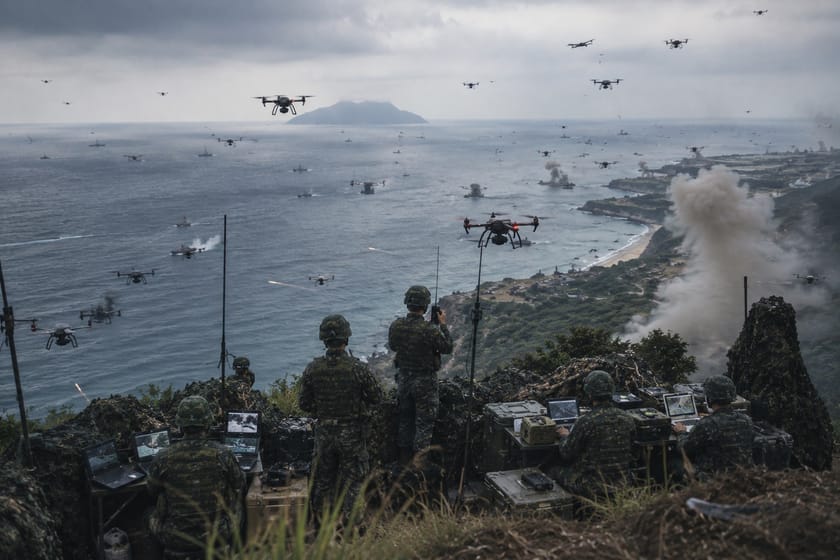
In June 2025, Ukraine launched over 100 drones to strike five air bases and a number of long-range bombers deep in Russian territory. Ukraine launched the drones simultaneously using a mix of remote control and artificial intelligence (AI) targeting software to destroy several Russian strategic bombers, and covertly smuggled drones

Rebuilding Combat Electromagnetic Warfare for U.S. Ground Forces

From Ukraine to the South China Sea, the electromagnetic spectrum is no longer an ancillary support function. Russian forces in Ukraine deploy systems like Zhitel, Krasukha and Leer-3 to jam communications, spoof GPS, and locate command posts in near real time. These capabilities enable rapid precision fires and drone strikes

Putting Operation Spider’s Web in Context

On June 1, 2025, the Ukrainian special intelligence services launched Operation Spider’s Web, a remotely triggered drone attack that may have damaged or destroyed over 40 Russian strategic aircraft at four air bases deep inside the Russian Federation’s borders. Spider’s Web was undeniably successful: Russia’s capacity

The UK’s New Take on Cyber

From its 2010 inception to its most recent 2022 publication, the primary focus of the United Kingdom's National Cyber Strategies (NCS) evolved from a security-focused approach to a broader, more ambitious vision of ‘cyber power.’ The United Kingdom views cyber power as the projection of cyber security. With

Do we need a Cyber Force? Part 2: Arguments Against a Seventh Service

Episode 111 examines the arguments against a United States Cyber Force. This episode is a two part series of Project Cyber that looks at the arguments for and against a Cyber Force. Our guests share their backgrounds and the history of the U.S. Cyber Command. They express their skepticism

Showing of 37 posts

Bridging the gap between irregular warfare scholars, practitioners, and policymakers.

Stay in the Loop

Subscribe for the latest articles, podcasts, and events.

Subscribe

Our Work

Technology is evolving in months, while defense organizations often take decades to adapt. This growing gap leaves practitioners in a dangerous reality: forced to make irreversible decisions in high-stakes environments without clear doctrine or updated ethics training. The Emerging Technology and Irregular Warfare Focus Area was created to bridge this divide by connecting the people closest to the challenges and building a community that learns faster than our adversaries.

Strategic Tensions & Core Dilemmas

We move beyond the tools themselves to analyze the friction generated when new technologies—from AI and autonomous systems to crypto and biotech—are embedded in irregular warfare. Our work focuses on four core dilemmas:

  • Decisionmaking & Accountability: Reshaping decision dynamics in decentralized environments while maintaining political control and mitigating civilian harm.
  • Diffusion & Escalation: Addressing how low-cost, high-impact technologies enable nonstate actors to evade intelligence and exploit deniability.
  • Legitimacy & Effectiveness: Navigating the tension between operational success and public legitimacy as capabilities outpace existing laws.
  • Influence & Trust: Leveraging technology for humanitarian effectiveness while countering adversary efforts to undermine trust through algorithmic bias and misinformation.

Our Operating Principles

We are not interested in technology in search of an application. Our efforts are guided by three functional pillars:

  1. Problem-driven: We start with the friction points practitioners face on the ground. When existing doctrine is ignored, we seek to understand why and identify practical solutions.
  2. Whole-of-Society Perspective: Technology in the gray zone reshapes populations and creates long-term dependencies. We utilize a systems approach to ensure technological impacts align with broader strategic objectives.
  3. Future-focused: We prioritize anticipating what’s coming next over merely analyzing last year’s conflict, ensuring we stay ahead of emerging tactics and dilemmas.


Meet the Team

Jeffrey Szuchman Jeffrey Szuchman Co-Director, Emerging Technology
Kristina Kempkey Kristina Kempkey Co-Director, Emerging Technology
Aidan Harte Aidan Harte Advisor, Emerging Technology
August Cole August Cole Senior Advisor, Emerging Technology
Hugh Harsono Hugh Harsono Advisor, Emerging Technology
Jason Alexander Jason Alexander Advisor, Emerging Technology
Matt Sansone Matt Sansone Advisor, Emerging Technology
Noah Flessel Noah Flessel Advisor, Emerging Technology
Steve Feldstein Steve Feldstein Senior Advisor, Emerging Technology