In June 1752, a war party of roughly two hundred and fifty Odawa, Ojibwe, and Potawatomi tribal warriors led by the French-Canadian Charles de Langlade descended on the town of Pickawillany. This Miami village in the Ohio Country was led by Chief Memeskia, who had defected from the French trading orbit to the British. The raid killed Memeskia, scattered the British traders, and reasserted French-aligned Indigenous authority over a region that had begun to drift away. This raid helped precipitate the war that would soon engulf North America. It also highlighted how the French irregular system could work. A French-Canadian officer mobilized an overwhelmingly Indigenous force whose political logic, at that moment, fit French imperial interests. French forincipal and the Native nations were sovereign agents whose cooperation depethe alignment of interests, not the dictates of command.
The analogy of Rogers' Rangers is the one most frequently invoked when contemporary writers discuss irregular warfare and special operations forces (SOF) in this era. It highlights specialized tactics and field skills but, it misses a more important structural insight. The French-Canadian system and its Native partners resemble modern SOF more closely than the Rangers because their effectiveness depended on legitimacy and networked trust that external sponsors have consistently struggled to replicate or sustain. Thus, while modern SOF community does not need to abandon Rogers’ Rangers for what they and their tactical success represent, they likely do need to open the intellectual aperture and consider other operational successes like the French-Canadians.
Legitimacy as Operational Capability
For much of the conflict in North America, operational necessity alongside geography and other key considerations drove French irregular operations as much more than just adjuncts to conventional operations.. The system relied on two elements: French-Canadian partisans such as Joseph Marin de la Malgue, François-Marie Bissot de Vincennes, and Charles de Langlade, and a network of Native American nations who fought as allies, not auxiliaries.
The system's effectiveness derived from its integration within social and political frameworks that conferred meaning and authority, rather than from tactical skill alone. The partisans, though highly proficient, succeeded because French Canadians were embedded in the Pays d'en Haut, the Upper Country of New France, which included the Great Lakes region. Raised in the fur trading networks that linked French colonial society and Indigenous communities, they spoke local languages, understood local customs and courtesies, and maintained deep kinship obligations. These well documented local conditions were the key architecture on which the alliance system was built and functioned. When Langlade, and others like him, assembled war parties, they relied on these enduring relationships rather than on unfamiliar followers.
The Native American nations that fought alongside the French during the Seven Years War operated according to their own political logic, not as French proxies. The Odawa, Potawatomi, Abenaki, and other nations of the Pays d'en Haut each pursued distinct strategic interests: protecting trade, maintaining reciprocal defense, and gaining prestige through military success. The French Canadian and Native alliance was most effective when these objectives aligned with French aims. It fractured when they diverged.
French commanders possessed limited leverage because Native participation was voluntary, and alternatives existed. Legitimacy among these partner forces stemmed from their established relationships with local communities and political environments. It could not be conferred by an external sponsor. Indeed, research on the political and military activity of the Wabanaki Confederacy and other northeastern nations documents how thoroughly these relationships preceded and structured French-Indigenous cooperation. The French did not create effective Native allies. They partnered with Indigenous groups that were already effective.
Until relatively recently, the dominant interpretation of the North American frontier during this period, both contemporaneously and in later historiography, characterized it as wilderness or ungoverned space, a vacuum for European power projection. This is a fundamental misreading with operational consequences. The Ohio Valley and the Pays d'en Haut were governed by political systems that, though illegible to Europeans, imposed socio-political order. Trade, territorial claims, alliances, and prestige interacted to constitute that order, which predictably meant effective operations required engagement based on these established structures. The French succeeded not by imposing rules, but by having Canadian partisans join existing systems as useful participants. They attended councils, gave protocol gifts, and accepted reciprocal obligations. In practice, they were accountable to their partners' political systems.
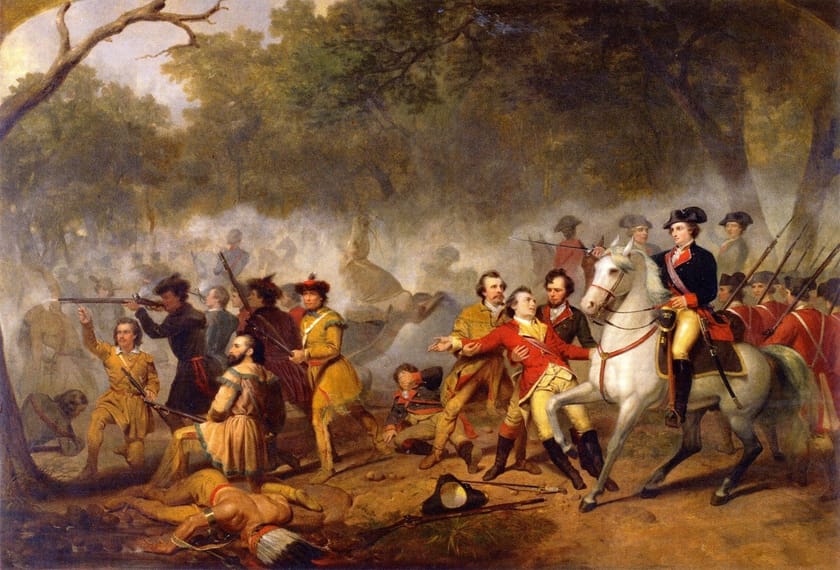
General Edward Braddock's 1755 defeat at the Battle of the Monongahela exemplifies the consequences of misreading governed space as ungoverned. Despite fielding 2,100 British regulars and Virginia militia, more than 500 became casualties, including Braddock. The disaster stemmed from more than a tactical miscalculation. Braddock failed to grasp that political control of terrain determines military outcomes. Native warriors allied with the French acted as independent, sovereign actors. French Canadian and Native tactical coordination was shaped by French actions that, over time, offered strategic incentives for alliance.
This reconsideration holds significant implications for contemporary SOF. Analysts frequently misclassify regions such as the Sahel, the Horn of Africa, and the Afghanistan-Pakistan borderlands as "ungoverned spaces," perpetuating Braddock's categorical error. These areas possess administrative systems that may be clan-based, tribal, religious, criminal, or hybrid. The central issue is not whether to impose governance but whether external actors can operate effectively within systems they did not create or control. The French approach, while imperfect, uniquely incorporated local accountability. Most modern advise-and-assist frameworks overlook this integration, and their outcomes reflect the deficiency.
The Partner Force Dilemma: Interest Alignment, Not Capability
The tension between sponsor and partner is not a novel observation. The central structural challenge in externally supported irregular campaigns is that sponsors, like the French, cannot fully monitor or control partners whose interests, though partially aligned, remain distinct. French commanders confronted the same structural condition in its least mediated form. The variables that determined outcomes in North American wilderness, like interest alignment, legitimacy, the limits of external leverage are visible in the history of the war with a clarity that more recent cases, entangled in bureaucratic complexity, rarely permit. A persistent tendency in contemporary practice treats partner force problems as capability gaps: inadequate training, equipment, or leadership. This approach misidentifies the problem. The empirical literature on building partner forces identifies interest alignment as the key variable.
The French case illustrates the dynamic in concentrated form. Native warriors possessed considerable military skill, but their war aims often diverged from those of the French, and no amount of French training or equipment could bridge that gap. Native allies fought to protect specific territories, fulfill alliance obligations, demonstrate prestige, and achieve objectives within their own communities. They participated in operations that aligned with these goals, independent of French strategic priorities. When a raid failed to meet their objectives, they returned home, regardless of French operational requirements. After 1758, as French strategic commitments visibly weakened, Native support diminished with them. The alliance's political foundation, not its tactical proficiency, was the variable that determined outcomes.
The principal-agent problem is structural. Partners with legitimacy and local connections tend to resist subordination to a sponsor. Partners who accept a sponsor's direction often lack credibility in the local context. The French managed this trade-off more effectively than the British by granting partners greater autonomy. The approach unsettled commanders, but it produced results. The British structured alliances around command relationships and derived fewer benefits. In legitimacy-driven campaigns, sponsors are frequently the junior partners even when they hold more resources. The French held North America for decades by accepting that dynamic. Sponsors who fail to do so reduce strong partners to mere subordinates and lose the conflict.
Tactical Success, Strategic Fragility
Cooperation with the French enabled a relatively small colonial population to resist a larger British North American force and impede British expansion. Frontier raiding proved effective, alliances persisted, and the strategic frontier shifted in France's favor. Between 1758 and 1760, French fortunes collapsed. The irregular system did not fail. The conventional and political frameworks supporting it disintegrated. The fall of Louisbourg, the defeat at the Plains of Abraham, and the surrender of Montreal were failures in politics, resources, and conventional warfare. Partisan raiders and their Native allies achieved tactical successes. France lost the strategic context that gave their efforts significance.
Native nations that had staked their political futures on the French alliance were left exposed. After their victory, the British had little incentive to maintain French-era protocols. Gift-giving, council attendance, and reciprocal obligations ended, replaced by British paternalism and land seizures. Pontiac's War of 1763 arose when Native nations refused to accept British rule on the terms it was offered and took up arms.
The lesson is not that irregular warfare is inherently doomed at the strategic level. Its effectiveness depends on a political framework that requires ongoing maintenance. The French defeat resulted from the erosion of the political commitments that gave those forces strategic purpose, decisions made by individuals distant from the Ohio Valley and largely unaware of the consequences.
A contemporary parallel is evident in the Afghan Local Police (ALP) program which is perhaps the closest analog. Established in 2010 and expanded in subsequent years, the program intentionally sought partners with local legitimacy: men recruited from the villages they would defend, vetted by local elders, and embedded within tribal structures rather than imposed externally. Where the program succeeded, it did so for reasons similar to those of the French-Canadian system. ALP units operated within social systems that conferred meaning on their actions, were accountable downward to their communities, and possessed terrain knowledge, kinship networks, and social trust that external training could not replicate. Where it failed, it failed for the same reasons French alliances failed: local commanders selected for a sponsor's convenience rather than community standing, accountability flowing upward to the coalition rather than laterally to the village, and legitimacy that was superficial rather than substantive.
Tactical effectiveness at the village level was consistently hostage to a strategic framework maintained in Washington, Brussels, and Kabul. When that framework collapsed in 2021, partners who had fought effectively for a decade were left exposed, much like Native allies after 1763. The right question is not "can our partners fight," but whether the political framework in which they operate possesses enough integrity and durability to make their tactical success matter. Drawing on the French-Canadian and the Afghan examples, if modern SOF formations are going to enable meaningful tactical successes and prevent strategic failure than they must find future operational inspiration from past operational successes. The political commitments the French made that gave Native force strategic purpose should be that inspiration.
Reframing SOF Practice
The historical case does not require a new doctrine or training program. It calls for a revised approach to the political objectives and structural dilemmas SOF must confront.
Four key reframes follow:
The first reframe is built on legitimacy as the primary unit of analysis. Partner force assessments typically focus on DOTMLPF-P categories: doctrine, organization, training, materiel, and related factors. These metrics are suitable for evaluating conventional military capability. They are insufficient for assessing the determinants of irregular warfare effectiveness, which include the political relationships, social embeddedness, and community accountability that confer legitimacy. Evaluating these factors requires anthropological, historical, and political methods, often on timelines that exceed a standard deployment cycle.
The second reframe concerns accountability. French-Canadian partisans were, in significant respects, more accountable to their Native allies than to colonial authorities, and that asymmetry contributed to their effectiveness. Doctrine typically assumes accountability flows upward to the chain of command, the embassy, or the national capital. In genuine partner force operations, the most consequential accountability is lateral and downward: to the partner force, to the communities served, and to the political relationships that confer legitimacy. Establishing such accountability, and accepting the attendant loss of control, is among the most challenging and least anticipated aspects of advise-and-assist missions.
The third reframe addresses time. The French alliance system developed over generations through trade, intermarriage, and the gradual accumulation of reciprocal obligation. Contemporary SOF cannot establish decades-long relationships within a single deployment cycle. They can acknowledge that relationships of eighteen months are not equivalent to those of twenty years, and they can structure engagements to identify, preserve, and leverage existing relationships rather than rebuilding from the ground up with each rotation.
The fourth and final reframe is structural and requires more rigorous analysis. Partner force operations rest on an implicit contract: partners fight in exchange for the maintenance of a political framework that gives their effort significance. The sponsor's institutional incentives systematically undervalue this contract. Strategic decisions are made on timelines and by actors disconnected from the field where the contract is honored or broken. The resulting risk is disproportionately borne by the partner and by the field-level practitioner who established the relationship. Planning frameworks that assume the durability of the political framework misallocate that risk. Clearly identifying the structure is essential for any serious analysis of what tactical-level practitioners can reasonably commit to. The Native nations that invested their political futures in the French alliance, and the Afghan partners who did so in the post-2001 framework, ultimately bore the consequences of a risk their sponsoring institutions had no mechanism to recognize.
Conclusion
The French-Canadian partisan system and its Native American allies constitute one of the most effective irregular warfare campaigns in North American history. The case also illustrates the structural characteristics of a form of warfare in which the decisive variable is the quality of political relationships, which cannot be manufactured by external sponsors or replicated within rotational constraints. The Seven Years' War did not yield a doctrine to address these features, Rogers' Rules notwithstanding, because they are not doctrinal issues.
Langlade achieved tactical success and France still lost the war. And the partners who enabled French victories ultimately bore the costs of an alliance whose political framework had collapsed. SOF practitioners operating in similar environments are not destined to repeat this history. Avoiding the outcome requires understanding these dynamics as a framework for navigating structural tensions, and maintaining transparency with partners and policymakers about which tensions can be managed and which cannot.
Andrew Rolander is an irregular warfare and strategic competition analyst supporting the US Department of War. He is particularly interested in maritime strategy and irregular warfare.
The views expressed are those of the authors and do not reflect the official position of the Irregular Warfare Initiative, Princeton University’s Empirical Studies of Conflict Project, the Modern War Institute at West Point, the Department of the Army, the Department of War, or the United States Government.
Main image is “Washington as Captain in the French and Indian War” painted by Junius Brutus Stearns ca. 1851. At the Battle of the Monongahela in the French and Indian War, Major George Washington on a white horse witnesses mortally wounded British General Edward Braddock, July 9, 1755. Lithograph was released in 1854 under the series title “Life of George Washington: The Soldier” and the original oil-on-canvas features at the Virginia Museum of Fine Arts (VMFA) in Richmond, VA. Source from Wikimedia Commons.
If you value reading the Irregular Warfare Initiative, please consider supporting our work. And for the best gear, check out the IWI store for mugs, coasters, apparel, and other items.The French outcome does not indict the system. It does, however, indict the political framework that failed to sustain it. The French-Canadian model and its Afghan analog succeeded at the