Description
Episode 160 examines the origins of Britain’s World War II commandos and the enduring role of special operations forces from Churchill’s era to today.
Summary
This episode explores the creation of Britain’s legendary commando force following the military disasters of 1940. Author Monty Halls and retired Lieutenant General Scott Howell trace how a remote house in the Scottish Highlands became the laboratory for a new kind of warrior – one selected for grit, initiative, adaptability, and the ability to operate independently under extreme pressure.
The conversation examines how early commando raids sought to restore British morale, create uncertainty in the German high command, divert enemy forces, and achieve strategic effects disproportionate to the number of troops involved. The discussion then connects these experiences to modern special operations forces, including their relationship with the conventional military, the importance of joint and combined operations, the risks of overrelying on raids as an easy policy option, and the challenge of adapting SOF for cyber, space, drones, and future large-scale conflicts. Throughout, the episode asks how military institutions can protect their mavericks, preserve disciplined initiative, and innovate before battlefield failure forces them to change.
Takeaways
- Britain created its commando force after conventional doctrine and military institutions failed to meet the crisis of 1940.
- Inverailort House became an experimental training ground where unconventional leaders developed the culture and methods of the early commandos.
- Small special operations units can create strategic effects by disrupting adversaries, creating uncertainty, diverting forces, and influencing political decision-making.
- The psychological impact of commando raids often exceeded their immediate tactical results.
- Early raids frequently failed, demonstrating that courage and audacity cannot substitute for intelligence, training, planning, and joint support.
- Special operations forces are most effective when their missions support a broader military and political strategy rather than becoming the strategy themselves.
- The characteristics sought in World War II commandos – grit, initiative, adaptability, discipline, and comfort with uncertainty – remain central to SOF selection today.
- Unconventional thinking does not mean abandoning standards, accountability, or good order and discipline.
- Decentralized special operations require exceptional junior leaders who can exercise independent judgment without losing sight of strategic objectives or ethical boundaries.
- SOF organizations need political and bureaucratic advocates who can protect experimentation, secure resources, and connect unconventional forces to senior decision-makers.
- Modern special operations forces must maintain close ties with the conventional services and be prepared to enable the broader joint force in large-scale conflict.
- Future operators will need to integrate traditional military skills with cyber, space, drones, influence activities, intelligence capabilities, and rapidly changing technology.
- Success can make military organizations resistant to change, so leaders should deliberately build forces and concepts capable of making today’s successful models obsolete.
- Policymakers should understand what special operations forces can and cannot accomplish and avoid treating them as an inexpensive solution to every strategic problem.
- Military institutions should protect their mavericks, encourage disciplined experimentation, and adapt before the cost of failure is paid in blood.
Lieutenant General Scott Howell is a retired U.S. Air Force officer who served as the Commanding General of Joint Special Operations Command the the Vice Commander of US Special Operations Command. His experience includes senior leadership in Air Force special operations and extensive work with joint and allied special operations forces.
Monty Halls is the author of Churchill’s Killing House: The Origins of World War II’s Legendary Commando Fighting Force. A former Royal Marine, he has worked with members of the British and allied special operations communities and has written extensively about the history and modern role of the Royal Marines and commandos.
Kyle Atwell is the host for episode 160. Please reach out to him with any questions about the episode or IWI.
The Irregular Warfare Podcast is a production of the Irregular Warfare Initiative (IWI). We are a team of volunteers dedicated to bridging the gap between scholars and practitioners to support the community of irregular warfare professionals. IWI generates written and audio content, coordinates events for the IW community, and hosts critical thinkers in the field of irregular warfare as IWI fellows. You can follow and engage with us on Facebook, Twitter, Instagram, YouTube, or LinkedIn.
Subscribe to our monthly newsletter for (always free!) access to our written content, upcoming community events, and other resources.
All views expressed in this episode are the personal views of the participants and do not represent those of any government agency or of the Empirical Studies of Conflict Project.
Intro music: “Unsilenced” by Ketsa
Outro music: “Launch” by Ketsa
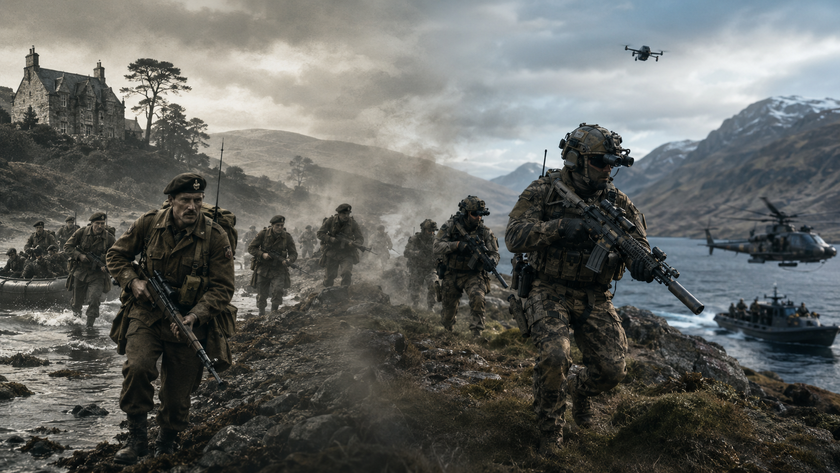
Photo: Cover image generated using AI-assisted digital art tools.