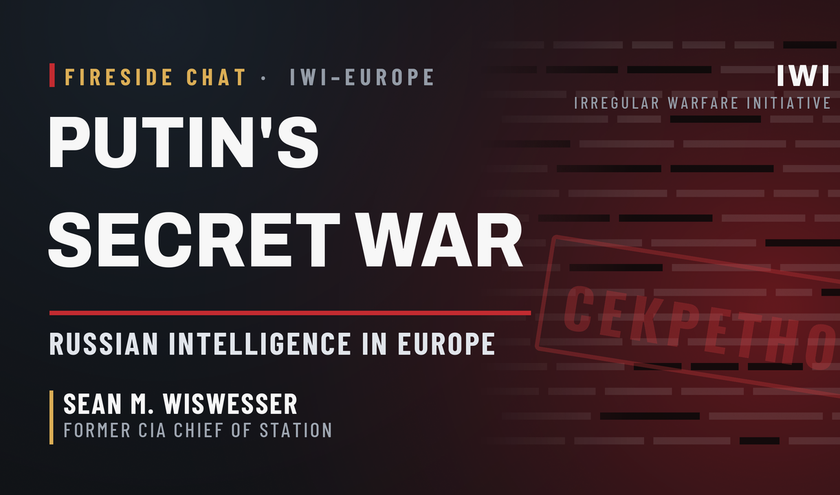
Sean M. Wiswesser is a former senior CIA operations officer with nearly three decades of experience across intelligence, foreign service, and defense. His career included multiple overseas tours, deployments to conflict zones and denied areas, service as a Chief of Station, and joint-duty assignments across the U.S. intelligence community. He is also a consultant, lecturer, and a contributor to The Cipher Brief’s “Kremlin Files” column. His academic background includes history and Russian & Slavic linguistics at the University of North Carolina–Chapel Hill and a Master of Strategic Studies from the Air War College, where his thesis received the Russia Integrated Deterrence Award.
Wiswesser’s book, Tradecraft, Tactics, and Dirty Tricks: Russian Intelligence and Putin’s Secret War (Naval Institute Press, 2026), examines the evolution, methods, and operational mindset of Russian intelligence services. It situates contemporary espionage, influence, sabotage, recruitment, and other covert activities within the longer institutional traditions of Russian statecraft and Moscow’s strategic confrontation with the West. The book is aimed at both specialists and general readers seeking to understand why Russian intelligence methods remain consequential for Western security.
Our conversation examined the role that Russian intelligence operations enable or complement the Kremlin’s broader forms of irregular warfare and strategic competition. We discussed how his book connects historical doctrine with current Russian clandestine activity and what has changed in the Putin era; limitations of the hybrid warfare term in describing Russia’s operations; the lessons Russia’s intelligence services are learning from its ongoing war on Ukraine; how Russia is adapting its operations across Europe; how European publics can recognize and resist Russia’s malign activities; what potential Russian intelligence threats loom on the horizon and steps we can take now to mitigate them; and much more!
This discussion aligns closely with IWI-Europe’s focus on linking scholarship with practitioner experience and strengthening Europe’s capacity for resilience, deterrence, and societal defense. IWI-Europe’s work emphasizes that Russia’s war against Ukraine is not only a military conflict, but also a source of urgent lessons about the changing character of conflict, European preparedness, along with implications for the U.S., NATO, and EU.
We hope you enjoy it.
The views expressed are those of the author and do not reflect the official position of the Irregular Warfare Initiative, Princeton University’s Empirical Studies of Conflict Project, the Modern War Institute at West Point, Department of the Army, Department of War, or the United States Government.