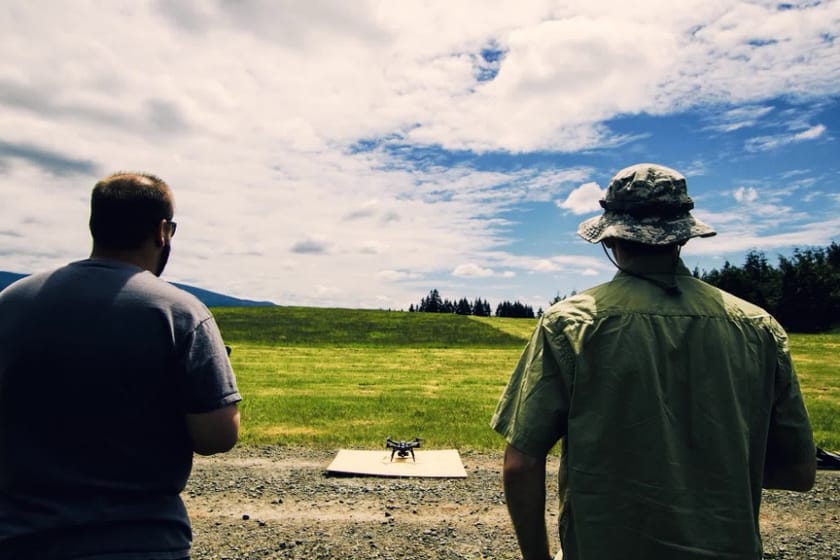
In late May 2026, the intelligence subsection of Rio de Janeiro's public security secretariat informed Brazilian reporters that military police aircraft had filmed a training session inside Complexo do Alemão, a cluster of favelas in the city’s North Zone. The complex is the turf of Rio’s largest criminal faction, the Comando Vermelho (CV), which was formed in a Rio prison in the 1970s and now controls entire sections of the city. About ten men stood around an unmanned aircraft three meters long. The instructor, according to the assessment, was a Brazilian who spent a year as a volunteer in Ukraine’s war against Russia. Upon his return, he began teaching the faction combat techniques, logistics, and aerial monitoring. Investigators also claim the CV has been paying airfare for members without criminal records to volunteer in Ukraine, and that two came home and went straight to Alemão.
Days later, on May 28, the State Department designated the CV as Specially Designated Global Terrorists under Executive Order 13224, and announced a Foreign Terrorist Organization (FTO) designation under Section 219 of the Immigration and Nationality Act, which took effect on June 5. Once an FTO designation takes effect, material-support law can reach training provided to the organization, which brings the alleged skill-acquisition pathway between Ukraine and violent criminal organizations in South America within reach of American criminal law.
Export controls and customs inspections are built to find objects. What volunteers learn in combat crosses borders with them when they return and leaves no trace in a shipment, a controlled component, or an end-use certificate. The statute does not tell investigators when the knowledge a lawful traveler carries home becomes part of an organization. The policy problem is recognizing when one person’s skill becomes a capability that factions can reproduce on their own.
I spent twenty-three years as an investigator with the São Paulo Civil Police. My assignments included the elite organized-crime investigations unit, DEIC, and its specialized narcotics enforcement unit, DENARC, where I worked against Brazil’s largest criminal organization—the Primeiro Comando da Capital (PCC), formed in São Paulo’s prison system in 1993. One pattern held throughout my career: when the PCC needed a technical skill it lacked in weapons maintenance, communications, or moving money, it found someone who had that skill, brought them inside its organization, and required them to produce successors.
Evidence and Attribution
The Alemão case presents two pieces of evidence. The first is what police observed: an aircraft filmed a training session in territory the CV controls, with about ten men gathered around one large drone. That is the direct record.
The second is what state intelligence assesses. Investigators describe the platform as an agricultural or cargo model with a payload near 80 kilograms and a range of up to 12 kilometers. Pablo Sartori, the police chief who heads that subsecretariat, gave the purpose they attribute to it: moving weapons and drugs between communities without using roads police can block. He said the faction had already flown it to film police operations and used drones to drop grenades. The Ukrainian origin of the instruction, the instructor’s identity, the travel financing, and the ballistic plate he presented to the CV leader known as Doca belong to the same category. All of it derives from one assessment reported by the press. No charges have been announced over the travel financing, and the two remain unnamed, though Sartori claimed their arrest was a matter of time.
Roughly a dozen Brazilian outlets carried the story within seventy-two hours, and all trace to that single assessment. Understanding that repetition is not corroboration, we are left with a usable lead about an acquisition pathway, not confirmation that Ukraine is the source of the instruction. The CV is running instruction on a large, unmanned aircraft and spreading it to a group, evidence of demand for employment expertise. The allegations found here, as well as elsewhere in Latin America, describe organizations looking abroad to satisfy a demand. To target this unique problem, we must first understand the pathway and then identify the key indicators that can corroborate (and dismantle) its use.
A Pathway that Moves Through People
Most analysts organize their study of criminal drone adoption around hardware, including work published on IWI about what insurgent and narco-criminal platforms can do. Those are procurement questions, and they do not address what the Alemão case represents. Hardware can be seized and stocks can be destroyed. An organization that has absorbed how to employ, sustain, and teach a system keeps the capability after the equipment is gone. Agricultural drones are built for operators with minimal training, and if the CV’s application is cargo between two points, a year in Ukraine is an expensive way to acquire what a dealer will teach in an afternoon.
Dealers, however, do not teach the tactics required to help an aerial capability survive contact with state security forces. Flying a loaded airframe through an urban corridor while police helicopters work the same airspace is a different problem from spraying a field, and so is arranging launch and recovery so neither aircraft nor crew is exposed. The distinction is between operating the aircraft and employing it. Employment means planning a route against an adversary who is also in the air, rehearsing it, arranging batteries and a recovery point, and reading contested airspace in flight. That is instruction a small military unit receives, and no dealer provides it. Ukraine has generated that knowledge at industrial scale. The Global Initiative Against Transnational Organized Crime (GI-TOC) reports that drones now account for 60 to 80 percent of frontline strikes by some estimates. Some foreign volunteers may acquire part of that knowledge before returning home.
The CV is a different organization, so the pattern I observed in São Paulo gives Rio a mechanism to test rather than a conclusion to import. A group that governs territory has reason to convert an acquired skill into an internal one, and a class is the first sign the conversion may have begun. The ten men being trained therefore carry more analytical weight than the instructor, and the public record does not show whether the process became durable.
The Capability Predates the Instruction
One likely corridor of employment is a five-kilometer link between Gardênia Azul and Muzema, both under CV control and next to the militia stronghold of Rio das Pedras. Gardênia Azul is already in the record. On February 15, 2024, CV members attacked militia positions there with drones fitted to drop explosives. The Federal Police investigated and, in September, executed Operação Buzz Bomb, arresting a Navy corporal as the operator. The prosecutor’s office had already charged the targets with organized crime membership and possession of explosive material.
That attack is two years older than the Alemão case, and Gardênia Azul reappears in the 2026 assessment as one end of the corridor. During Operação Contenção on October 28, 2025, the deadliest police action in Brazilian history, with at least 121 killed, the CV dropped explosives from drones onto police. Whatever the alleged Ukrainian instruction may have contributed, it would have reached an organization that had already fielded armed drones, used them for surveillance, and recruited a serving member of the armed forces who adapted the aircraft and trained its members.
None of that makes the Alemão case old news, and the difference lies in how the knowledge was obtained. The corporal was recruited inside Brazil, and he was arrested. A capability resting on one man is one arrest from degrading, the vulnerability the PCC addressed by requiring specialists to train successors. The 2026 assessment alleges that the CV selected members without criminal records, payed their fares, and brought them home to teach. Sartori also detailed the alleged travel route: volunteers entered Europe through Portugal or the Netherlands, traveled to Serbia, and crossed overland into Ukraine. If corroborated across multiple travelers, the recurring itinerary would strengthen the assessment that the CV was organizing a repeatable pathway for acquiring combat-derived knowledge rather than relying on an isolated volunteer. The group filmed at Alemão is what that difference would look like on the ground.
The legal setting has changed as well. When CV operators dropped explosives on militia positions in 2024 and on police in 2025, the organization had not yet been designated as an FTO, and training provided to it fell outside § 2339B. The session filmed in late May also predates the June 5 effective date. What changed that day applies to whatever comes next: if the CV is still bringing volunteers home to teach, that instruction now runs to a designated organization.
Parallel Allegations Beyond Brazil
Brazil is not the first place where the transfer of combat-derived drone knowledge into a criminal organization has been alleged. In its October 2025 report on criminal drone use, GI-TOC recorded an allegation that a Mexican cartel member was sent to Ukraine to learn first-person view piloting with the International Legion. Defense News and other outlets later reported a joint Ukrainian investigation into Spanish-speaking volunteers, including former FARC fighters using forged documents. Every account traces to a single original report that no agency has yet confirmed. That chain is separate from the Alemão assessment, and both describe the same mechanism: people carrying knowledge home rather than equipment crossing a border.
Why Export Controls Don’t Work
The tools built to slow the spread of military capability assume that capability travels as matter. Export controls, end-user certificates, customs interdiction, and component tracking operate on objects crossing borders, and this pathway presents none. A Brazilian with a clean record buys an airline ticket, travels lawfully to Europe, serves in a foreign military formation, and comes home with nothing a border control system is built to detect. Counter-drone systems engage the platform in flight, not the knowledge behind its use, which, once shared among local operators, no longer depends on the man who brought it. Arresting the instructor does not repatriate what he taught.
Under 18 U.S.C. § 2339B, providing material support to a designated foreign terrorist organization is a federal crime, and the statutory definition enumerates training and expert advice alongside weapons and money, training being instruction designed to impart a specific skill. Instruction provided to the CV after June 5 can constitute material support, provided prosecutors establish the statute’s knowledge requirement and a basis for United States jurisdiction. The designation gives prosecutors a tool against a transfer export controls cannot see, but does not by itself federalize conduct occurring wholly inside Brazil.
What to Look For
Security cooperation with Brazil should aim at the process the CV may be building. An aerial capability becomes permanent when it is integrated into the division of labor, maintenance, and the relationships that reproduce operators. That work is harder to observe than the airframes, and it gets neglected.
Intelligence and law enforcement agencies should also track returning volunteers as a proliferation channel. Policy attention to foreign fighters in Ukraine has concentrated on radicalization and political violence, and skill transfer into criminal groups sits outside that frame. Where volunteers served, and which armed organizations govern the territories they return to, belong in collection requirements.
Observable signs would separate a durable program from one instructor and a borrowed idea: Training that recurs in the same territory across months, local instructors who never traveled abroad, standardized platforms across separate CV-controlled areas, and arrangements for maintenance and spare parts. The clearest marker would be drone operators appearing as a distinct role in the division of labor. None has surfaced publicly, which settles little, since investigative records in these cases routinely stay sealed.
These recommendations hold even on the weakest reading of the intelligence claim. No public evidence shows the aircraft at Alemão completing a delivery. The record supports possession, training, stated purpose, and the surveillance and grenade use Sartori described. It does not establish a functioning aerial logistics system. The policy window narrows as the skill becomes routine and spreads beyond the person who introduced it.
Carlos Eduardo da Silva is a researcher and strategic intelligence analyst focused on transnational organized crime. He spent twenty-three years as an investigator with the São Paulo Civil Police, in its organized-crime (DEIC) and narcotics (DENARC) divisions, where his work centered on the Primeiro Comando da Capital (PCC). He holds a degree in Public Security and a postgraduate specialization in Criminology, and his current research examines the PCC as a system of criminal governance and its transnational expansion.
The views expressed are those of the author and do not reflect the official position of the Irregular Warfare Initiative, Princeton University's Empirical Studies of Conflict Project, the Modern War Institute at West Point, or the United States Government.
If you value reading the Irregular Warfare Initiative, please consider supporting our work. And for the best gear, check out the IWI store for mugs, coasters, apparel, and other items.
Veteranos da guerra dos outros: como o conhecimento de combate chegou a uma organização designada como terrorista no Brasil
No fim de maio de 2026, a Subsecretaria de Inteligência da Secretaria de Estado de Segurança Pública do Rio de Janeiro informou a jornalistas que aeronaves da Polícia Militar filmaram um treinamento dentro do Complexo do Alemão, conjunto de favelas na Zona Norte da cidade. O complexo é território da maior facção criminosa do Rio, o Comando Vermelho (CV), surgido num presídio fluminense nos anos 1970 e hoje no controle de áreas inteiras da cidade. Cerca de dez homens estavam em volta de uma aeronave não tripulada de três metros de comprimento. Segundo a avaliação da inteligência, o instrutor era um brasileiro que passou um ano como voluntário na guerra da Ucrânia contra a Rússia. Na volta, começou a ensinar à facção técnicas de combate, logística e monitoramento aéreo. Os investigadores afirmam ainda que o CV vem pagando passagens aéreas a integrantes sem antecedentes criminais para que se alistem como voluntários na Ucrânia, e que dois deles voltaram e seguiram direto para o Alemão.
Dias depois, em 28 de maio, o Departamento de Estado Americano designou o CV como Terrorista Global Especialmente Designado (SDGT), com base na Ordem Executiva 13224, e anunciou sua designação como Organização Terrorista Estrangeira (FTO), prevista na Seção 219 da Lei de Imigração e Nacionalidade dos Estados Unidos, com efeito a partir de 5 de junho. Uma vez em vigor a designação de FTO, a legislação americana sobre apoio material pode alcançar o treinamento prestado à organização, o que coloca ao alcance do direito penal dos Estados Unidos a suposta via de aquisição de habilidades entre a Ucrânia e organizações criminosas violentas da América do Sul.
Controles de exportação e fiscalização aduaneira foram feitos para encontrar objetos. O que um voluntário aprende em combate atravessa a fronteira com ele na volta e não deixa rastro numa carga, num componente controlado ou num certificado de uso final. A lei não diz aos investigadores em que momento o conhecimento trazido por um viajante em situação regular passou a pertencer à organização. O problema de política pública está em reconhecer quando a habilidade de uma pessoa virou uma capacidade que a facção consegue reproduzir por conta própria.
Fui investigador da Polícia Civil de São Paulo por vinte e três anos. Trabalhei no Departamento Estadual de Investigações Criminais (DEIC), a unidade de elite contra o crime organizado, e no Departamento Estadual de Prevenção e Repressão ao Narcotráfico (DENARC), dedicando a maior parte deste período a investigações contra a maior organização criminosa do Brasil, o Primeiro Comando da Capital (PCC), fundado no sistema prisional paulista em 1993.Um padrão se manteve ao longo da minha carreira: quando faltava ao PCC uma habilidade técnica, fosse em manutenção de armas, comunicações ou movimentação de dinheiro, a organização encontrava alguém que a dominasse, trazia essa pessoa para dentro da sua estrutura e estabelecia que ela formasse sucessores.
Evidência e atribuição
O caso do Alemão reúne dois tipos de informação. O primeiro é o que a polícia observou: uma aeronave filmou um treinamento em território controlado pelo CV, com cerca de dez homens reunidos em torno de um drone de grande porte. Esse é o registro direto.
O segundo é o que a inteligência estadual avalia. Os investigadores descrevem a plataforma como um modelo agrícola, com carga útil de cerca de 80 quilos e alcance de até 12 quilômetros. Pablo Sartori, o delegado que chefia a subsecretaria, expôs a finalidade atribuída ao equipamento: levar armas e drogas entre comunidades sem usar vias que a polícia pode bloquear. Segundo ele, a facção já tinha usado a aeronave para filmar operações policiais e empregado drones para lançar granadas. A origem ucraniana da instrução, a identidade do instrutor, o financiamento das viagens e a placa balística que ele deu ao chefe do CV conhecido como Doca pertencem à mesma categoria. Tudo isso deriva de uma única avaliação divulgada pela imprensa. Nenhuma acusação foi anunciada pelo financiamento das viagens, e os dois homens continuam sem nome público, embora Sartori tenha afirmado que a prisão deles era questão de tempo.
Cerca de uma dúzia de veículos brasileiros publicou a história em setenta e duas horas, e todos remontam a essa mesma avaliação. Como repetição não é corroboração, o que se tem é uma pista útil sobre uma via de aquisição, sem confirmação de que a instrução veio da Ucrânia. O CV está dando aulas sobre uma aeronave não tripulada de grande porte e difundindo esse conhecimento para um grupo, sinal de que há demanda por conhecimento de emprego operacional. As alegações registradas aqui, assim como em outros pontos da América Latina, descrevem organizações que buscam no exterior o que não têm em casa. Para enfrentar esse problema específico, é preciso primeiro entender a via e depois identificar os indicadores capazes de corroborar (e desmontar) seu uso.
Uma via que passa por pessoas
A maior parte dos analistas estuda a adoção de drones pelo crime a partir do equipamento, inclusive em trabalhos publicados no IWI sobre o que plataformas insurgentes e do narcotráfico conseguem fazer. São questões de aquisição, que não alcançam o que o caso do Alemão representa. Equipamento pode ser apreendido, e estoques, destruídos. Uma organização que aprendeu a empregar, manter e ensinar um sistema conserva a capacidade depois que o equipamento desaparece. Drones agrícolas são feitos para operadores com treinamento mínimo e, se o uso do CV for transportar carga entre dois pontos, um ano na Ucrânia é um caminho caro para aprender o que um revendedor comum ensina numa tarde.
O revendedor, porém, não ensina as táticas que permitem a uma capacidade aérea sobreviver ao contato com as forças de segurança do Estado. Pilotar uma aeronave carregada por um corredor urbano enquanto helicópteros da polícia atuam no mesmo espaço aéreo é um problema diferente de pulverizar uma lavoura, e o mesmo vale para organizar a decolagem e o recolhimento sem expor a aeronave nem a equipe. A distinção está entre operar a aeronave e empregá-la. Empregar significa planejar uma rota contra um adversário que também está no ar, ensaiá-la, providenciar baterias e um ponto de recolhimento e ler o espaço aéreo disputado durante o voo. É o tipo de instrução que uma pequena unidade militar recebe, e nenhum revendedor oferece. A Ucrânia produziu esse conhecimento em escala industrial. A Global Initiative Against Transnational Organized Crime (GI-TOC) relata que, segundo algumas estimativas, os drones já respondem por 60% a 80% dos ataques na linha de frente. Alguns voluntários estrangeiros podem adquirir parte desse conhecimento antes de voltar para casa.
O CV é outra organização, de modo que o padrão que observei em São Paulo oferece ao Rio um mecanismo a testar, e não uma conclusão a importar. Um grupo que governa território tem motivos para transformar uma habilidade adquirida em habilidade interna, e uma aula é o primeiro sinal de que essa conversão pode ter começado. Por isso, os dez homens em treinamento têm mais peso analítico do que o instrutor, e o registro público não mostra se o processo se tornou duradouro.
Drones armados antes da alegação ucraniana
Um provável corredor de emprego é a ligação de cinco quilômetros entre Gardênia Azul e Muzema, ambas sob controle do CV e vizinhas de Rio das Pedras, reduto da milícia. Gardênia Azul já aparece no registro. Em 15 de fevereiro de 2024, integrantes do CV atacaram posições da milícia ali com drones adaptados para lançar explosivos. A Polícia Federal investigou o caso e, em setembro, deflagrou a Operação Buzz Bomb, que prendeu um cabo da Marinha apontado como operador. O Ministério Público já havia denunciado os alvos por integrar organização criminosa e por posse de material explosivo.
Esse ataque é dois anos anterior ao caso do Alemão, e Gardênia Azul reaparece na avaliação de 2026 como uma das pontas do corredor. Durante a Operação Contenção, em 28 de outubro de 2025, a ação policial mais letal da história do Brasil, com pelo menos 121 mortos, o CV lançou explosivos de drones contra policiais. Qualquer que tenha sido a contribuição da suposta instrução ucraniana, ela teria chegado a uma organização que já havia colocado drones armados em campo, já os usava para vigilância e já recrutara um militar da ativa que adaptou as aeronaves e treinou seus integrantes.
Nada disso torna o caso do Alemão notícia velha, e a diferença está na forma como o conhecimento foi obtido. O cabo foi recrutado no Brasil, e foi preso. Quando uma capacidade depende de um único operador, uma prisão basta para degradá-la; o PCC lidou com esse risco obrigando seus especialistas a formar sucessores. A avaliação de 2026 sustenta que o CV selecionou integrantes sem antecedentes criminais, pagou suas passagens e os trouxe de volta para ensinar. Sartori também detalhou a suposta rota de viagem: os voluntários entraram na Europa por Portugal ou pelos Países Baixos, seguiram para a Sérvia e cruzaram por terra até a Ucrânia. Se confirmado em vários viajantes, o itinerário recorrente reforçaria a avaliação de que o CV organizava uma via repetível de aquisição de conhecimento de combate, sem depender de um voluntário isolado. O grupo filmado no Alemão é a forma que essa diferença assumiria no terreno.
O cenário jurídico também mudou. Quando operadores do CV lançaram explosivos contra posições da milícia em 2024 e contra policiais em 2025, a organização ainda não havia sido designada como FTO, e o treinamento prestado a ela ficava fora do alcance do § 2339B. A sessão filmada no fim de maio também é anterior à entrada em vigor, em 5 de junho. O que mudou naquele dia vale para o que vier depois: se o CV continua trazendo voluntários de volta para ensinar, essa instrução passa agora a ser prestada a uma organização designada.
Alegações paralelas fora do Brasil
O Brasil não é o primeiro lugar onde se alega a transferência de conhecimento de combate com drones para uma organização criminosa. Em seu relatório de outubro de 2025 sobre o uso criminoso de drones, a GI-TOC registrou a alegação de que um integrante de um cartel mexicano foi enviado à Ucrânia para aprender pilotagem FPV (first-person view) na Legião Internacional. O Defense News e outros veículos noticiaram depois uma investigação ucraniana conjunta sobre voluntários hispanofalantes, entre eles ex-combatentes das FARC com documentos falsos. Todos esses relatos remontam a uma única reportagem original que nenhum órgão confirmou. Essa cadeia é independente da avaliação do Alemão, e ambas descrevem o mesmo mecanismo: pessoas levando conhecimento para casa, em vez de equipamentos cruzando uma fronteira.
O que os controles de exportação não veem
As ferramentas criadas para conter a difusão de capacidade militar partem do pressuposto de que a capacidade viaja como matéria. Controles de exportação, certificados de usuário final, interdição aduaneira e rastreamento de componentes atuam sobre objetos que cruzam fronteiras, e essa via não apresenta nenhum. Um brasileiro sem antecedentes compra uma passagem aérea, viaja legalmente para a Europa, serve numa formação militar estrangeira e volta para casa sem nada que um sistema de controle de fronteiras esteja preparado para detectar. Sistemas antidrone atacam a plataforma em voo, sem alcançar o conhecimento por trás do seu emprego, que, uma vez compartilhado entre operadores locais, deixa de depender do homem que o trouxe. Prender o instrutor não repatria o que ele ensinou.
Pelo 18 U.S.C. § 2339B, prestar apoio material a uma organização terrorista estrangeira designada é crime federal, e a definição legal inclui treinamento e assessoria especializada ao lado de armas e dinheiro, entendido o treinamento como instrução destinada a transmitir uma habilidade específica. A instrução dada ao CV depois de 5 de junho pode, portanto, configurar apoio material. A acusação ainda precisaria demonstrar dois elementos que a designação não fornece: que o instrutor sabia que o CV era uma organização designada ou que praticava terrorismo, e um dos vínculos de jurisdição enumerados na lei, como nacionalidade americana, residência permanente nos Estados Unidos, conduta ocorrida em parte no território americano ou o fato de o acusado ser levado ou encontrado nos Estados Unidos depois do crime. A designação dá aos promotores uma ferramenta contra uma transferência que os controles de exportação não enxergam, mas um brasileiro que treina integrantes do CV no Rio e nunca entra na jurisdição americana fica, na prática, fora do seu alcance.
O que observar
A cooperação em segurança com o Brasil deveria mirar o processo que o CV pode estar construindo. Uma capacidade aérea se torna permanente quando é integrada à divisão de trabalho, à manutenção e às relações que reproduzem operadores. Esse trabalho é mais difícil de observar do que as aeronaves, e acaba negligenciado.
Órgãos de inteligência e de aplicação da lei também deveriam acompanhar os voluntários que retornam como um canal de proliferação. A atenção dada aos combatentes estrangeiros na Ucrânia concentrou-se em radicalização e violência política, e a transferência de habilidades para grupos criminosos ficou fora desse enquadramento. Onde os voluntários serviram e quais organizações armadas governam os territórios para onde voltam são informações que pertencem aos requisitos de coleta.
Sinais observáveis permitiriam distinguir um programa duradouro de um instrutor isolado com uma ideia emprestada. Entre eles estão treinamentos que se repetem no mesmo território ao longo de meses, instrutores locais que nunca viajaram ao exterior, plataformas padronizadas em áreas distintas sob controle do CV e arranjos para manutenção e peças de reposição. O marcador mais claro seria o surgimento de operadores de drone como função própria na divisão de trabalho. Nenhum desses sinais veio a público, o que pouco resolve, já que os autos de investigação nesses casos costumam permanecer sob sigilo.
Essas recomendações se sustentam mesmo na leitura mais fraca da alegação de inteligência. Nenhuma evidência pública mostra a aeronave do Alemão concluindo uma entrega. O registro sustenta a posse, o treinamento, a finalidade declarada e o uso para vigilância e lançamento de granadas descrito por Sartori. Não comprova um sistema logístico aéreo em funcionamento. A janela para a ação de política pública se estreita à medida que a habilidade se torna rotina e se espalha para além de quem a introduziu.
Carlos Eduardo da Silva é pesquisador e assessor de inteligência estratégica dedicado ao crime organizado transnacional. Atuou por vinte e três anos como investigador da Polícia Civil de São Paulo, nas divisões de crime organizado (DEIC) e de narcóticos (DENARC), com trabalho centrado no Primeiro Comando da Capital (PCC). É formado em Segurança Pública, com pós-graduação em Criminologia e em Segurança Pública e Sistema Penitenciário, e sua pesquisa atual examina o PCC como sistema de governança criminal e sua expansão transnacional.
As opiniões expressas são do autor e não refletem a posição oficial da Irregular Warfare Initiative, do Empirical Studies of Conflict Project da Universidade de Princeton, do Modern War Institute de West Point ou do governo dos Estados Unidos.
Se você valoriza a leitura da Irregular Warfare Initiative, considere apoiar nosso trabalho. E, para os melhores produtos, visite a loja da IWI, com canecas, porta-copos, roupas e outros itens.