On November 10, 2026, the Department of Justice unsealed a superseding indictment against Mohammad Baqer al-Saadi, an alleged operative of Iran’s Islamic Revolutionary Guard Corps (IRGC) and commander in Kata’ib Hezbollah. The indictment contained striking revelations: al-Saadi, held in New York since May 2026 awaiting trial on terrorism charges, allegedly passed coded messages to IRGC affiliates from jail to coordinate and finance an operation against American forces at Royal Air Force (RAF) Fairford, the US Air Force’s only heavy bomber forward operating location in Europe.
Prosecutors accuse al-Saadi and his IRGC affiliates of orchestrating earlier arson attacks and bombings against predominantly Jewish civilian targets in Europe. The perpetrators claimed these attacks under the name Harakat Ashab al-Yamin al-Islamiya (HAYI), a front through which Iranian operatives recruited local criminal proxies for violence as a service.
This campaign, the RAF Fairford plot, and a series of other reported threats are examined in a November 2026 CTC Sentinel study, which provides the foundation for this article. The study’s findings suggest growing ambitions to employ networks of criminal proxies against targets of military and diplomatic significance.
Tracing the 2026 Escalation: HAYI and Fairford
The original arson and bombing campaign against European civilian targets in March and April 2026, claimed under the HAYI banner, was, in al-Saadi’s own words, to “[distract] the enemy” and wage “psychological warfare” in order to “instill fear and terror in civilians.” Targets included synagogues, Jewish charities, the Israeli embassy in London, and a Bank of America office in Paris.
The more recent RAF Fairford plot coincided with wider Iranian threats against UK military installations, including reported plans to target American pilots using drones. US officials linked those threats to the redeployment of strategic bombers and KC-135 tankers, although the precise relationship between the Fairford plot and the wider threats remains uncertain. The episode has also generated Anglo-American friction and intensified local concerns about hosting American bases, creating further opportunities for Iranian propagandists.
Although the RAF Fairford plot caused no physical damage and HAYI’s attacks caused primarily property damage, these campaigns demonstrate the potential for strategic effects at relatively low cost. Their significance extends beyond individual attacks to pressure on military operations, allied relationships, and public confidence.
Iranian Intelligence’s Growing Ambitions
British authorities attributed HAYI’s campaign to members of the IRGC’s Quds Force (IRGC-QF). Known for irregular warfare across the Middle East, the Quds Force is increasingly exploiting criminal networks elsewhere. Its Unit 11000 has reportedly been linked to a plot targeting Israel’s ambassador to Mexico and attacks against Jewish and Israeli targets in Europe and Australia.
The IRGC’s separate Intelligence Organization (IRGC-IO) is also displaying wider ambitions in this area. In August, Iran International reported that its Unit 4000 was recruiting through intermediaries in Thailand and Indonesia for planned attacks against shipping and ports, including in the Malacca and Bangka Straits. Authorities in Qatar and Azerbaijan separately reported disrupting IRGC-linked plots involving military installations and the Baku–Tbilisi–Ceyhan pipeline. These reported activities suggest ambitions to impose military and economic costs across multiple theaters.
The agencies’ overlapping activities can also produce duplication. Some reports claim that the IRGC-QF and Ministry of Intelligence and Security may have separately funded the network behind the RAF Fairford plot without knowing of each other’s involvement. Nevertheless, coordination failures and inter-organizational rivalries have not prevented these agencies from pursuing increasingly ambitious targets (and may even encourage greater risk-taking). This decentralized approach is a familiar feature of Iran’s external operations, giving its networks greater resilience to disruption while allowing Tehran to maintain plausible deniability and distance itself from the actions of individual actors.
Iran’s Ambitions in North America
Iranian covert operatives also have ambitions in the United States, though this appears to have proven far more difficult than in Europe. Prosecutors allege that al-Saadi sought attacks against Jewish institutions in New York, Los Angeles, and Scottsdale. None of the plots materialized, in part because al-Saadi tasked an undercover officer whom he believed to be a member of a Mexican cartel.
Senior political figures have also been recent targets. In March 2026, trained Iranian operative Asif Merchant was convicted in an IRGC-directed murder-for-hire scheme in which he believed Donald Trump was the intended target. More recently, in November 2026, Treasury Secretary Scott Bessent confirmed that Iranian death threats had prompted his relocation to a military base.
These cases indicate continued Iranian intent to threaten civilians and decision-makers inside the United States, and complement separate campaigns of cyberattacks targeting Western critical infrastructure. They also illustrate how overseas organizers can seek local criminal assistance and impose substantial protective burdens even when attacks never materialize.
Tactical Activity, Strategic Potential
Renewed escalation in the US-Iran conflict could encourage Iranian actors to pursue overseas attacks with substantially greater military consequences. Clear interest in bases, shipping, and critical infrastructure suggests growing intent to cause more significant harm through local proxies.
Iran’s interest in airbases is particularly concerning in light of Ukraine’s Operation Spider’s Web, which demonstrated strategic bombers’ vulnerability to inexpensive drones operating deep inside national territory and deployed by unwitting local proxies (in Fairford’s case, truck drivers). Iran’s criminal proxies have not demonstrated comparable capability, but the combination of local access, remote command and control, and increasingly available technology creates opportunities for more destructive low-cost operations.
Even disrupted plots can impose costs. Repeated investigations and protective measures consume finite resources, while uncertainty generates fear and complicates decisions. Cost imposition and psychological warfare can therefore reinforce one another, allowing tactical action to produce strategic effects. For irregular warfare practitioners, assessing this campaign requires examining its cumulative effects on operational capacity, allied cohesion, and political resolve alongside the number of attacks prevented.
Disrupting and Deterring the Campaign
Countering this form of proxy-delivered effects requires raising Iran’s costs relative to its strategic benefits. Western governments must trace finance and communications upstream, disrupt and publicly expose overseas organizers, and impose meaningful, decisive, and coordinated financial and diplomatic costs on the Iranian institutions directing attacks.
Those wishing to counter these threats must also deter potential local proxies from signing up in the first place. A proactive approach to proxies is vital, since goal-line defense is unlikely to be sufficient against a threat that blends the resources and vision of a hostile state with the low profile and unpredictability of lone actors or home-grown terror cells. Deterrence, then, is vital and must be more than symbolic. Messaging to potential recruits should clearly highlight the outsized consequences of assisting hostile foreign intelligence services.
Crispin Smith is an attorney based in Washington, D.C. specializing in national security law. His research focuses on operational issues related to irregular warfare, information operations, and lawfare. He directs an initiative designed to counter human rights abusers, foreign terrorist organizations, and hostile states through targeted investigations, and is an advisor on economic and legal warfare at the Irregular Warfare Initiative. Previously, he co-founded the Militia Spotlight platform.
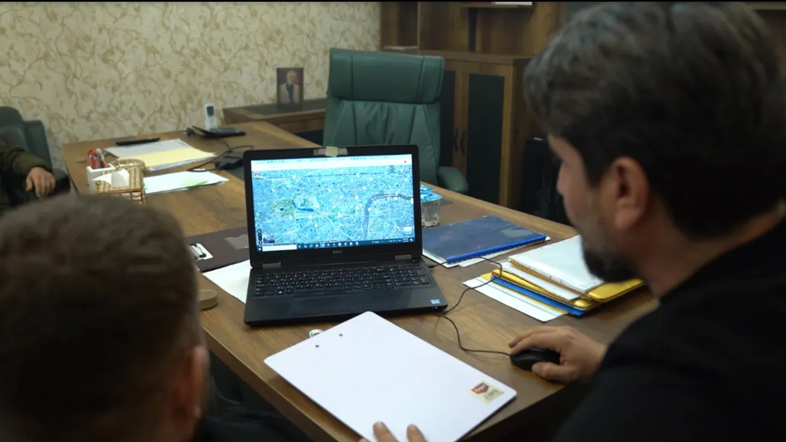
Image credit: Screenshot from an April video showing al-Hassani (left) and Mohajeri (right) meeting to plan terrorist attacks. Video captured by Mohammad Baqer al-Saadi. US Department of Justice
The views expressed are those of the authors and do not reflect the official position of the Irregular Warfare Initiative, Princeton University’s Empirical Studies of Conflict Project, the Modern War Institute at West Point, or the United States Government.
If you value reading the Irregular Warfare Initiative, please consider supporting our work. And for the best gear, check out the IWI store for mugs, coasters, apparel, and other items.
This article is a Focus Area self-published piece, and the content has not undergone standard editorial review. IWI hosts these pieces to facilitate rapid dialogue among practitioners, but the analysis, research, and original thought within the article remain the sole responsibility of the author.